

Little Minds, Big Feelings
Preschool is a time of enormous growth, including emotional development. Young children navigate new experiences, and learning to understand and manage their feelings is essential. Focusing on social emotional learning (SEL) and mindfulness practices builds a foundation for lifelong well-being, resilience, and success.
These skills impact everything. A child who can recognize their own emotions is better equipped to regulate them, form healthy relationships, and approach challenges with confidence. It’s not about eliminating difficult feelings like sadness, anger, or frustration, but about learning how to cope with them constructively.
There's a growing demand from parents for more emphasis on SEL in preschool settings. Schools are increasingly integrating these practices into their curriculum, and there’s a push for making these resources accessible to all children, regardless of background or learning style. We’ll likely see more creative approaches to implementation, moving beyond worksheets to experiential learning.
What *Is* Emotional Intelligence?
Emotional intelligence, or EQ, is the ability to understand and manage your own emotions, and to recognize and respond to the emotions of others. Even preschoolers can begin to develop these abilities, which are often broken down into five core components: self-awareness, self-regulation, social awareness, relationship skills, and responsible decision-making.
Self-awareness in a four-year-old isn’t about a sophisticated understanding of all their feelings, but rather recognizing basic ones like happy, sad, or angry. Self-regulation involves learning how to calm down when upset – maybe taking a deep breath or asking for help. Social awareness means noticing how others are feeling, and relationship skills involve learning how to share, cooperate, and resolve conflicts.
EQ and IQ are both important but measure different things. IQ focuses on cognitive abilities like reasoning and problem-solving, while EQ focuses on emotional abilities. A child can be academically bright but struggle with social interactions if their EQ isn't developed. Research suggests EQ is a stronger predictor of success in life than IQ alone. A study by the Carnegie Institute of Technology found that 85% of a person’s success is due to soft skills, including EQ, and only 15% is due to technical expertise.
- Self-Awareness: Recognizing your own emotions.
- Self-Regulation: Managing your emotions and impulses.
- Social Awareness: Understanding the emotions of others.
- Relationship Skills: Building and maintaining healthy relationships.
- Responsible Decision-Making: Making ethical and constructive choices.
SEL & Mindfulness Activities
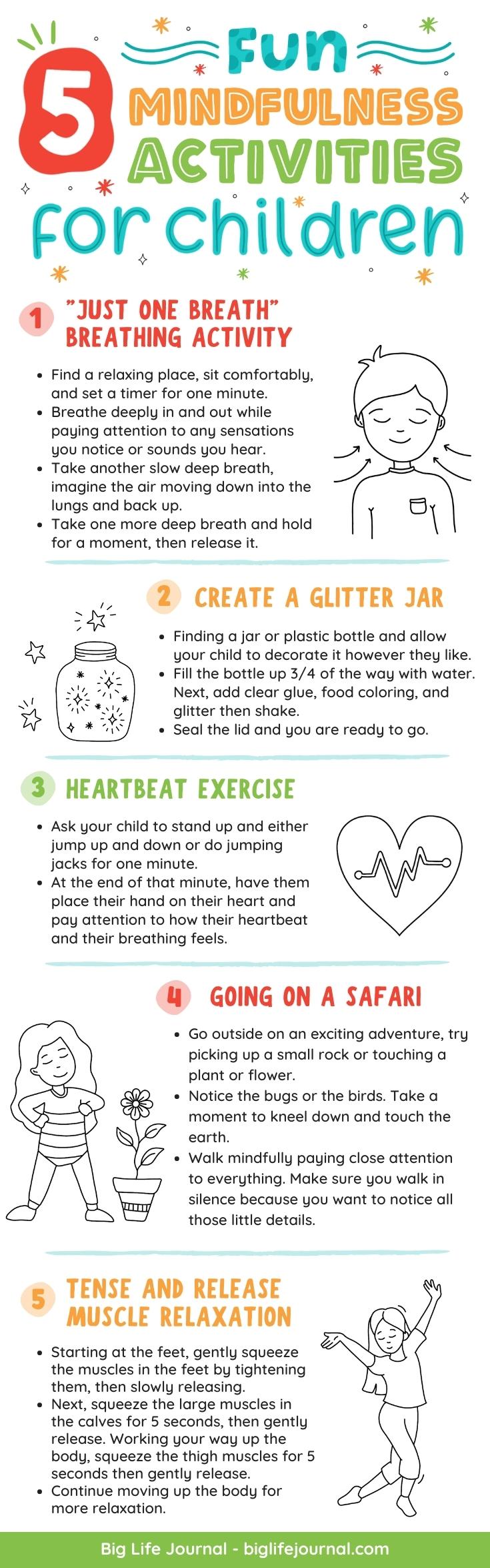
- Emotion Charades: Act out feelings like happy, sad, angry, and scared. This helps children connect facial expressions with internal states.
- Glitter Jars (Calm Down Bottles): Fill a plastic bottle with clear glue, water, and glitter. When shaken, the swirling glitter represents busy thoughts, and as it settles, it symbolizes calming down. Available from Crayola and Melissa & Doug.
- Story Time with Feeling Focus: While reading books like The Way I Feel by Janan Cain, pause to discuss the characters' emotions and why they might be feeling that way.
- Breathing Exercises with Bubbles: Encourage slow, deep breaths by having children blow bubbles. This connects breath control with a fun activity. Bubble solutions are widely available from brands like Fisher-Price.
- Feelings Check-Ins: Begin circle time with a quick check-in where each child shares how they are feeling using simple words or a feelings chart. Charts are available from Lakeshore Learning Materials.
- Kindness Rocks: Have children decorate rocks with positive messages and images, then ‘hide’ them for others to find. This promotes empathy and positive social interactions. Acrylic paints from brands like Sargent Art are suitable.
- Simon Says with Feelings: Play Simon Says, but incorporate emotions. For example, “Simon Says show me a happy face!” or “Simon Says stomp your feet when you’re angry!”
Mindfulness for Tiny Humans: It’s Possible!
Preschoolers can benefit from mindfulness exercises, but we need to adapt them for their developmental level. The key is to keep it short, simple, and focused on sensory experiences. Their attention spans are short, and abstract concepts can be difficult for them to grasp.
Instead of asking a child to "empty their mind," we can focus on what they can experience right now. This could involve noticing sounds, like the chirping of birds or the hum of the refrigerator. Focusing on smells, like the scent of flowers or the aroma of cookies baking, also works. Textures are great too – feeling the softness of a blanket or the smoothness of a stone. These sensory experiences ground children in the present moment.
"Belly breathing" is a popular technique. Make it fun by asking the child to imagine their belly is a balloon that gets bigger as they breathe in and deflates as they breathe out. Mindful eating is another activity. Give the child a raisin and ask them to notice its color, shape, and texture. Then, have them slowly taste it, paying attention to the flavor and how it feels in their mouth. A calm-down corner with soft cushions, books, and quiet toys can also provide a safe space for children to practice mindfulness.
- Belly Breathing: Imagine your belly is a balloon inflating and deflating.
- Mindful Eating: Slowly taste a small snack, noticing the color, shape, texture, and flavor.
- Sensory Exploration: Focus on sounds, smells, and textures around you.
SEL Activities: Games and Play
The best way to teach SEL skills to preschoolers is through play. These activities should be engaging, interactive, and require minimal materials.
Emotion Charades: Write different emotions on slips of paper (happy, sad, angry, scared) and have children act them out. This helps them recognize and express their own feelings, and learn to identify emotions in others. Feeling Faces: Provide children with materials to create different facial expressions – paper plates, crayons, markers, yarn. Discuss what each expression means.
Puppet Shows: Puppets are a fantastic tool for exploring emotions. Children can use puppets to act out scenarios involving different feelings, and practice problem-solving skills. Story Time with a Focus: Choose books that address SEL themes (see the next section) and pause throughout the story to ask questions like "How do you think the character is feeling?’ or ‘What could they do to solve this problem?"
Cooperative Building Challenges: Give children a building task that requires them to work together. This promotes teamwork, communication, and conflict resolution. Empathy Role-Playing: Present a scenario where someone is feeling sad or upset, and ask children to brainstorm ways to help that person. "Check In’ Circles: Inspired by Learning Care Group’s recommendations, start each day with a quick ‘check in’ where children share how they"re feeling. This encourages self-awareness and creates a supportive classroom environment.
Emotion Sorting: Use picture cards depicting different emotions and have children sort them into categories (e.g., happy feelings, sad feelings). Red Light, Green Light (Emotional Edition): Play the classic game, but instead of calling out "red light’ and ‘green light,’ use emotion words (e.g., ‘Angry Light – freeze!’ ‘Calm Light – go!").
Books That Build Emotional Muscles
Children's books are powerful tools for teaching SEL skills. They provide a safe and engaging way to explore complex emotions and social situations.
'The Way I Feel' by Janan Cain (1994): This book uses simple language and illustrations to introduce children to a wide range of emotions. It’s great for sparking conversations about feelings and helping children label their own experiences. 'Alexander and the Terrible, Horrible, No Good, Very Bad Day' by Judith Viorst (1972): This book validates children’s feelings of frustration and disappointment, and shows them that everyone has bad days. It can help them develop resilience and learn to cope with setbacks.
undefined, Really Angry..' by Molly Bang (1999): This book beautifully illustrates how to manage anger in a healthy way. Sophie learns to find a safe space to calm down and process her emotions. 'Have You Filled a Bucket Today?: A Guide to Daily Happiness for Kids' by Carol McCloud (2006):** This book introduces the concept of "bucket filling" – doing kind things for others to make them feel good. It encourages empathy and positive social interactions.
'Llama Llama Misses Mama' by Anna Dewdney (2002): This book addresses the common experience of separation anxiety and provides reassurance to children who are feeling anxious. 'The Color Monster: A Story About Emotions' by Anna Llenas (2015): This book uses colors to represent different emotions, making it easier for children to understand and identify them. 'Grumpy Monkey' by Suzanne Lang (2018): Jim Panzee is grumpy but doesn’t know why. He learns that it’s okay to feel grumpy sometimes. 'Bloom' by Doreen Cronin (2023): A newer title, Bloom explores the importance of kindness and helping others, showing how even small acts can make a big difference.
Teacher & Parent Check-In: Modeling Matters
Children are constantly observing the adults around them. They learn by watching how we manage our own emotions, respond to stress, and interact with others. This means that we need to model the behaviors we want to see in them.
If we want children to be able to regulate their emotions, we need to demonstrate healthy emotional regulation ourselves. This doesn't mean we have to be perfect – it's okay to show vulnerability and admit when we're feeling frustrated or overwhelmed. But it does mean taking the time to calm down before reacting, and using respectful language when expressing our feelings. The Learning Care Group PDF highlights the importance of 'Check In' activities for adults as well as children.
It’s challenging to stay calm when a child is having a meltdown, but it’s crucial. Taking a deep breath, speaking in a gentle tone, and validating their feelings can help de-escalate the situation. Labeling your own feelings can also be powerful. Saying something like "I’m feeling frustrated right now, and I need a moment to calm down’ shows children that it"s okay to experience difficult emotions and that there are healthy ways to cope with them.
Looking Ahead: SEL Trends in 2026
The field of SEL is constantly evolving. As we move into 2026, several key trends are emerging. We’re seeing an increased emphasis on culturally responsive SEL practices, recognizing that emotional expression and coping mechanisms can vary across cultures. Programs are becoming more tailored to meet the unique needs of diverse learners.
Another trend is the integration of SEL into STEM learning. Educators are realizing that SEL skills – like collaboration, problem-solving, and critical thinking – are essential for success in science, technology, engineering, and mathematics. There’s also growing interest in using technology to support SEL development, with apps and interactive games designed to teach emotional intelligence.
Teacher training and professional development in SEL are becoming increasingly important. Schools are investing in programs to equip teachers with the knowledge and skills they need to effectively integrate SEL into their classrooms. Finally, schools are continuing to adapt their approaches to support children’s emotional needs in the wake of the pandemic, recognizing the lasting impact of social isolation and stress.
Resources for Continued Learning
There are many excellent resources available to help parents and teachers. Preschool Playbook offers a wealth of activities, articles, and resources on our website. CASEL (Collaborative for Academic, Social, and Emotional Learning) is a leading organization in the field of SEL, and their website provides research-based information and resources.
Numerous books are available on SEL for both parents and educators. Search online for free printable SEL activities and worksheets to supplement your curriculum or home learning environment. Several organizations offer professional development opportunities for teachers, including workshops, online courses, and conferences.
Social-Emotional Learning Program Comparison for Preschools
| Program Name | Primary Focus Areas | Implementation Complexity | Parent Involvement | Reported Accessibility |
|---|---|---|---|---|
| Second Step | Emotion recognition, problem-solving, empathy | Moderate - requires training and consistent implementation | Materials and resources for family connection activities are available. | Widely used and recognized; resources available for diverse learners. |
| RULER | Recognizing, Understanding, Labeling, Expressing, and Regulating emotions | High - intensive professional development required for fidelity. | Parent resources are a key component, emphasizing emotional literacy at home. | Developed at Yale Center for Emotional Intelligence; research-based approach. |
| PATHS (Promoting Alternative Thinking Strategies) | Self-control, emotional understanding, social problem-solving | Moderate to High - curriculum is comprehensive and requires dedicated time. | Parent newsletters and workshops are suggested to reinforce concepts. | Focuses on cognitive behavioral techniques adapted for preschool age. |
| CASEL Preschool Program Guide | Self-awareness, self-management, social awareness, relationship skills, responsible decision-making | Variable - CASEL provides a framework, implementation depends on chosen program. | Encourages family engagement through suggested activities and communication. | CASEL does not provide a specific curriculum, but guides selection and implementation of evidence-based programs. |
| Kimochis | Emotional literacy, expressing feelings, building empathy | Low - utilizes puppets and stories to facilitate discussions. | Parent involvement through home activities and discussions around the characters. | Play-based approach, suitable for younger preschoolers. |
| MindUP | Mindfulness, emotional regulation, perspective-taking | Moderate - teacher training is recommended. | Resources for parents to practice mindfulness at home are provided. | Integrates neuroscience principles with mindfulness practices. |
Illustrative comparison based on the article research brief. Verify current pricing, limits, and product details in the official docs before relying on it.
No comments yet. Be the first to share your thoughts!