
Preschool Playbook
We chose these ten sensory play trends by looking at what actually works in classrooms and homes. Our selection logic focuses on activities that are easy to set up, use safe materials, and encourage genuine exploration rather than passive watching. We prioritized items that support fine motor skills, early literacy, and STEM concepts through hands-on interaction.
The "teacher playbook" concept here is simple: a guide that shows exactly how to adapt play for different ages. We looked for products and kits that offer clear instructions for parents and educators, ensuring the activity scales from a toddler’s curiosity to a preschooler’s focus. This approach helps answer the common question of what a 4-year-old should be learning—specifically, how to follow multi-step instructions and solve problems creatively.
Each trend selected below includes concrete product recommendations. We avoided abstract categories in favor of specific tools you can buy today. These items are chosen for their durability, safety, and ability to keep children engaged for extended periods. As you review the list, look for the Amazon widgets to see current availability and verified parent reviews.
10 Sensory Play Trends for Preschoolers
Use this section to make the decision easier to compare in real life, not just on paper. Start with the reader's actual constraint, then separate must-have requirements from details that are merely nice to have. A practical choice should survive normal use, maintenance, timing, and budget. If a recommendation only works in an ideal situation, call that out plainly and give the reader a fallback path.
The simplest way to use this section is to write down the must-have criteria first, then compare each option against those criteria before weighing nice-to-have features.
Pick the right fit
Use this section to make the decision easier to compare in real life, not just on paper. Start with the reader's actual constraint, then separate must-have requirements from details that are merely nice to have. A practical choice should survive normal use, maintenance, timing, and budget. If a recommendation only works in an ideal situation, call that out plainly and give the reader a fallback path.
-
Verify the basicsConfirm the core specs, condition, and fit before comparing extras.
-
Price the downsideLook for the repair, maintenance, or replacement cost that would change the decision.
-
Compare alternativesCheck at least two comparable options before treating one listing as the benchmark.
10 Sensory Play Trends: Engaging Activities & DIY Crafts
What is the best preschool curriculum for 3-year-olds? For three-year-olds, the most effective curriculum blends structured play with open-ended sensory exploration. Instead of rigid worksheets, look for programs that anchor learning in hands-on activities. Playing Preschool offers a 190-day program where themed units guide children through math, reading, and science through art and sensory play. This approach keeps young learners engaged while building foundational skills naturally.
What is a teacher playbook? In early childhood education, a teacher playbook is a practical guide that outlines effective teaching practices and how to adapt them for different learning styles. It acts as a rehearsal space for educators, showing them what success looks like in the classroom. The Preschool Playbook series provides this structure, offering lesson plans, templates, and writing journals that help teachers implement play-based learning consistently at home or in the classroom.
What should a 4-year-old be learning in preschool? By age four, children should be developing fine motor skills, early literacy, and social-emotional awareness. Sensory play is a key tool here; activities like water play, painting, and playdough manipulation strengthen hand muscles needed for writing. A good curriculum integrates these tactile experiences with early STEM concepts, allowing four-year-olds to explore cause and effect while refining their coordination and focus.
What are some examples of play-based learning in preschool? Play-based learning turns everyday activities into educational moments. Examples include building structures with blocks to learn geometry, mixing colors to understand primary hues, or using sensory bins to explore texture and volume. The Preschool Playbook highlights activities like art projects and sensory stations that make these concepts tangible. When children learn through play, they retain information better because they are actively participating in their own discovery.
10 Sensory Play Trends
-
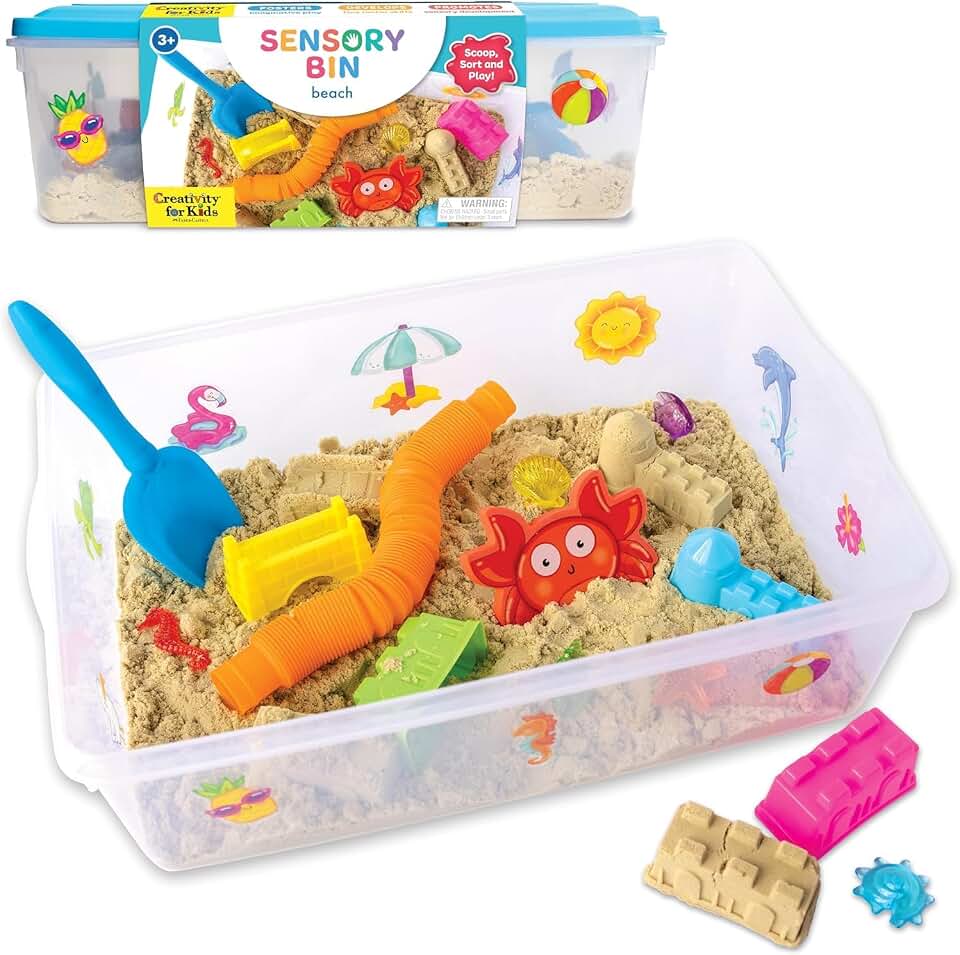
Kinetic Sand Sculpting Kinetic sand offers a unique tactile experience that is neither fully liquid nor solid. It holds shape well, making it ideal for practicing fine motor control and spatial awareness. Look for non-toxic, moldable varieties that don't dry out quickly.
-
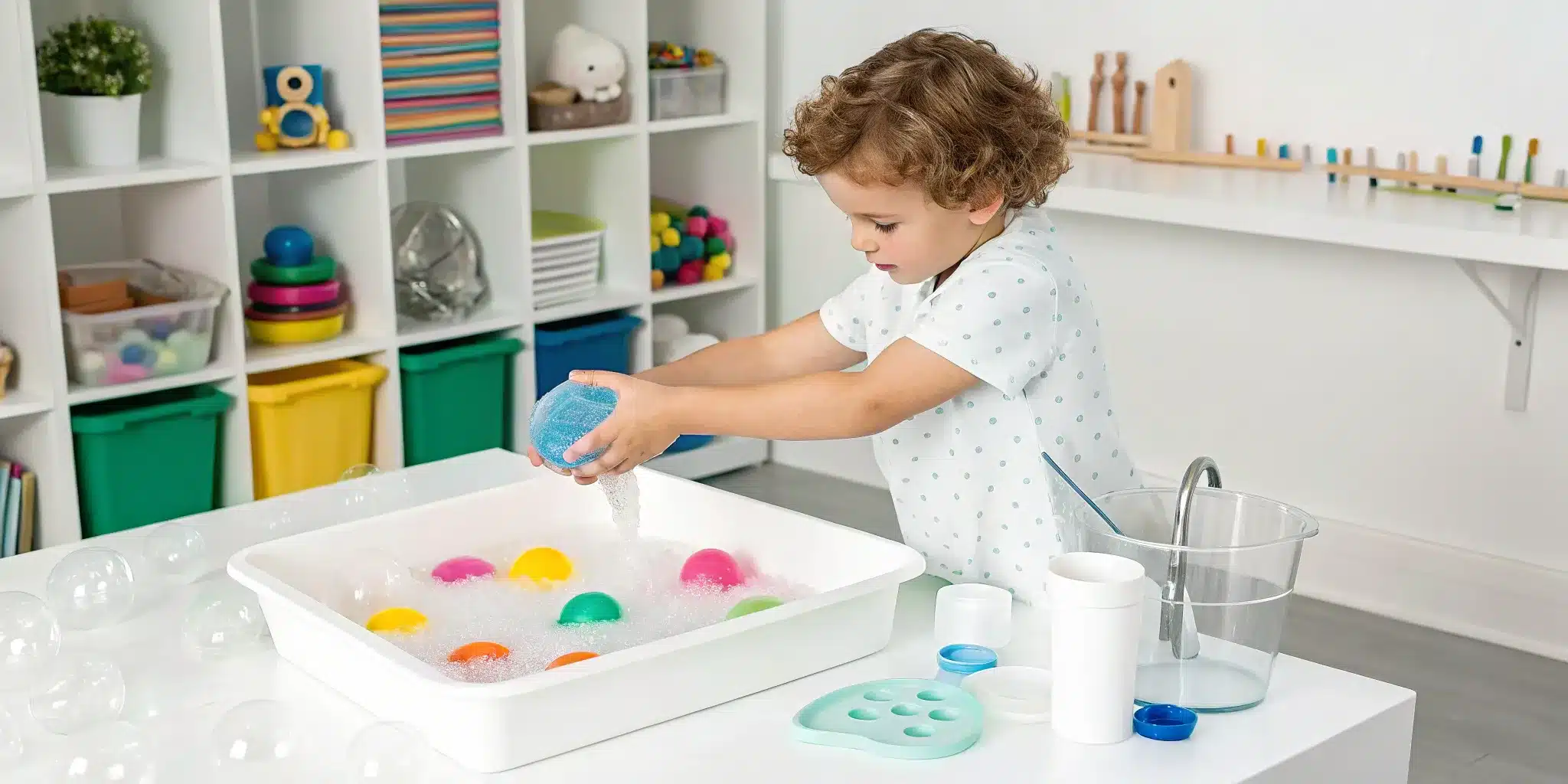
Water Bead Sensory Bins Water beads expand when soaked, providing a cool, slippery texture that engages touch and sight. They are excellent for scooping, pouring, and sorting activities. Always supervise closely to prevent ingestion, as they can be a choking hazard.
-
Play-Dough Modeling Classic play-dough remains a staple for strengthening hand muscles. It encourages creativity and imagination as children shape figures, animals, and abstract forms. Choose brands with natural ingredients to minimize exposure to synthetic additives.
-
Ice Cube Exploration Freezing small toys or colored water into ice cubes introduces concepts of temperature, melting, and time. Children can use salt, warm water, or tools to melt the ice, combining science with sensory play.
-
Rice and Bean Sorting Dry grains provide a lightweight, flowing texture that is easy to clean up. Sorting activities by color, size, or type help develop cognitive skills and hand-eye coordination. Use large containers to prevent spills.
-
Finger Painting Finger painting allows for direct skin contact with color, promoting sensory integration and artistic expression. Use washable, non-toxic paints to make cleanup easier. Cover surfaces with newspaper or plastic sheeting for quick protection.
-
Shaving Cream Writing Shaving cream offers a soft, foamy texture that is perfect for practicing letter formation or drawing shapes. It is easy to wipe away and often smells pleasant, making it an inviting medium for reluctant writers.
-
Magnetic Tiles Magnetic tiles combine sensory feedback with structural engineering. Children can build towers, bridges, and 3D shapes, learning about balance, symmetry, and geometry through hands-on manipulation.
-
Oobleck (Cornstarch and Water) Oobleck is a non-Newtonian fluid that acts like a solid when pressure is applied and a liquid when relaxed. This counterintuitive property fascinates children and sparks questions about states of matter. It is easy to make at home with simple ingredients.
-
Textured Fabric Swatches Providing various fabric samples—such as velvet, sandpaper, silk, and wool—allows children to explore different textures. This activity supports descriptive language development as children learn to articulate feelings like "soft," "rough," or "smooth."
Helpful gear
Use these product recommendations as a starting point, then choose the size, material, and price point that fit how you actually use the gear.

As an Amazon Associate, we may earn from qualifying purchases.
No comments yet. Be the first to share your thoughts!