

Why sensory bins ease back-to-school stress
Starting preschool is a massive shift for little ones. They are leaving the comfort of home for a room full of new faces, loud noises, and strict routines. Sensory bins act as a bridge during this transition. By letting children explore textures and objects in a controlled way, you give them a safe space to process big emotions before they face the classroom door.
The magic lies in the tactile feedback. When a child digs through rice or squishes kinetic sand, their nervous system calms down. This grounding effect reduces anxiety, making it easier for them to focus on the new social dynamics of preschool. It turns abstract fears into concrete, manageable play. You are essentially giving them a tool to self-regulate when things feel overwhelming.
Think of a sensory bin as a pressure valve. Instead of bottling up stress about separation or new rules, the child releases that energy through their hands. This physical engagement allows their brain to stay present and relaxed. You are not just keeping them busy; you are actively supporting their emotional resilience during a critical developmental window.
Sensory play grounds young learners, reducing anxiety through tactile exploration.
These bins also build fine motor skills that preschool teachers look for. Holding tweezers, scooping beans, or pouring water strengthens the small muscles in the hands and fingers. This physical readiness helps children handle pencils, open lunchboxes, and zip coats with more confidence. When their bodies feel capable, their stress levels drop.
The predictability of the bin is just as important as the texture. Home life can feel chaotic during the back-to-school rush. A sensory bin offers a consistent, repetitive action that feels safe. Whether it is sorting buttons or pulling shapes from cornmeal, the repetition is soothing. It creates a small island of calm in the busy week ahead.
10 Sensory-Bin Themes for Back-to-School Success
Transform your classroom routine with these 10 sensory-bin themes designed to boost engagement and fine motor skills. Each setup includes a clear step-by-step guide to help you assemble these essential preschool activities quickly and effectively.
-
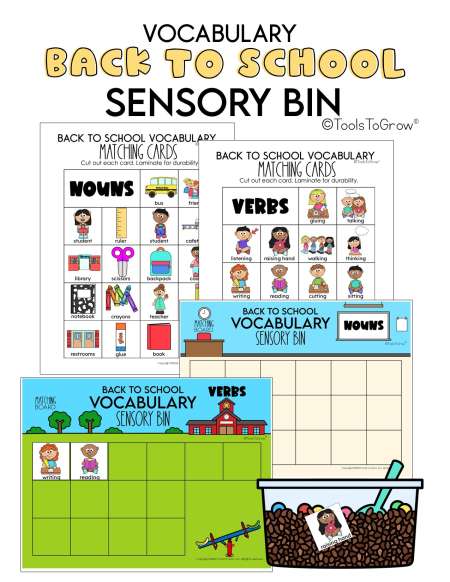
classroom supply scavenger hunt
Fill a bin with dry rice and hide plastic rulers, erasers, and scissors. Children dig through the grains to locate each item, building fine motor skills while recognizing school tools. This tactile search reinforces object permanence and vocabulary. The contrast between soft rice and hard plastic offers rich sensory input, making it an effective preschool activity that bridges play and classroom readiness without overwhelming young learners. -
alphabet letter digging
Bury foam letters in kinetic sand or dried beans. Children use tweezers or spoons to excavate characters, matching them to flashcards or spelling simple sight words. This focused digging action strengthens hand muscles essential for writing. By isolating letters in a textured medium, kids engage deeply with phonics and shape recognition, turning abstract symbols into tangible, searchable objects during these essential preschool activities. -
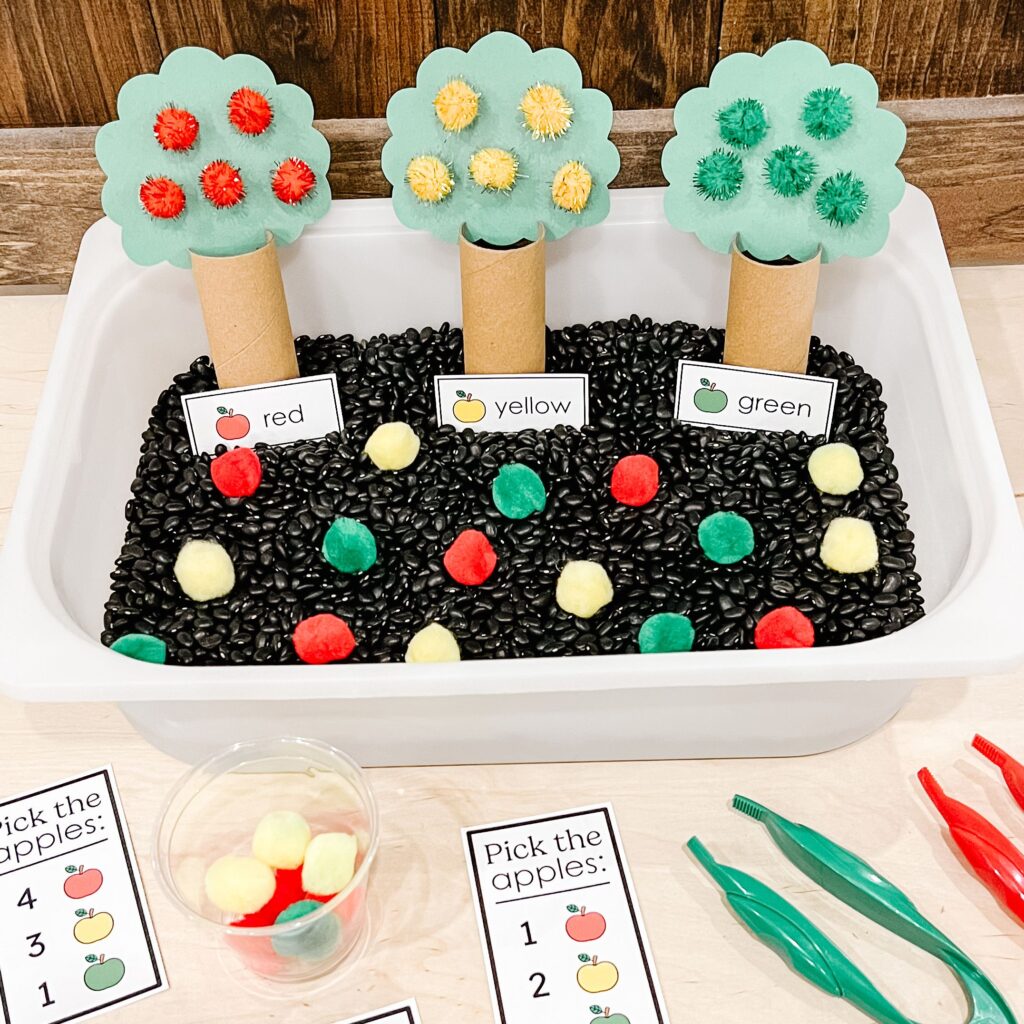
number counting with buttons
Scatter large, colored buttons across a shallow bin filled with water beads. Children scoop buttons using ladles, then sort them by size or color into numbered cups. This dual-task approach combines tactile exploration with early math concepts. The slippery texture of beads adds challenge, requiring precise grip control. It transforms simple counting into a hands-on numerical game that supports cognitive development through playful repetition. -

nature exploration with pinecones
Place pinecones, smooth stones, and dried leaves in a bin of shredded paper. Children examine textures, compare sizes, and arrange items by natural patterns. This outdoor-inspired theme encourages observational skills and scientific curiosity. The rough bark of pinecones contrasts sharply with soft paper, providing varied tactile feedback. It grounds preschool activities in the natural world, fostering respect for environmental elements through direct, sensory interaction. -

color sorting with pasta
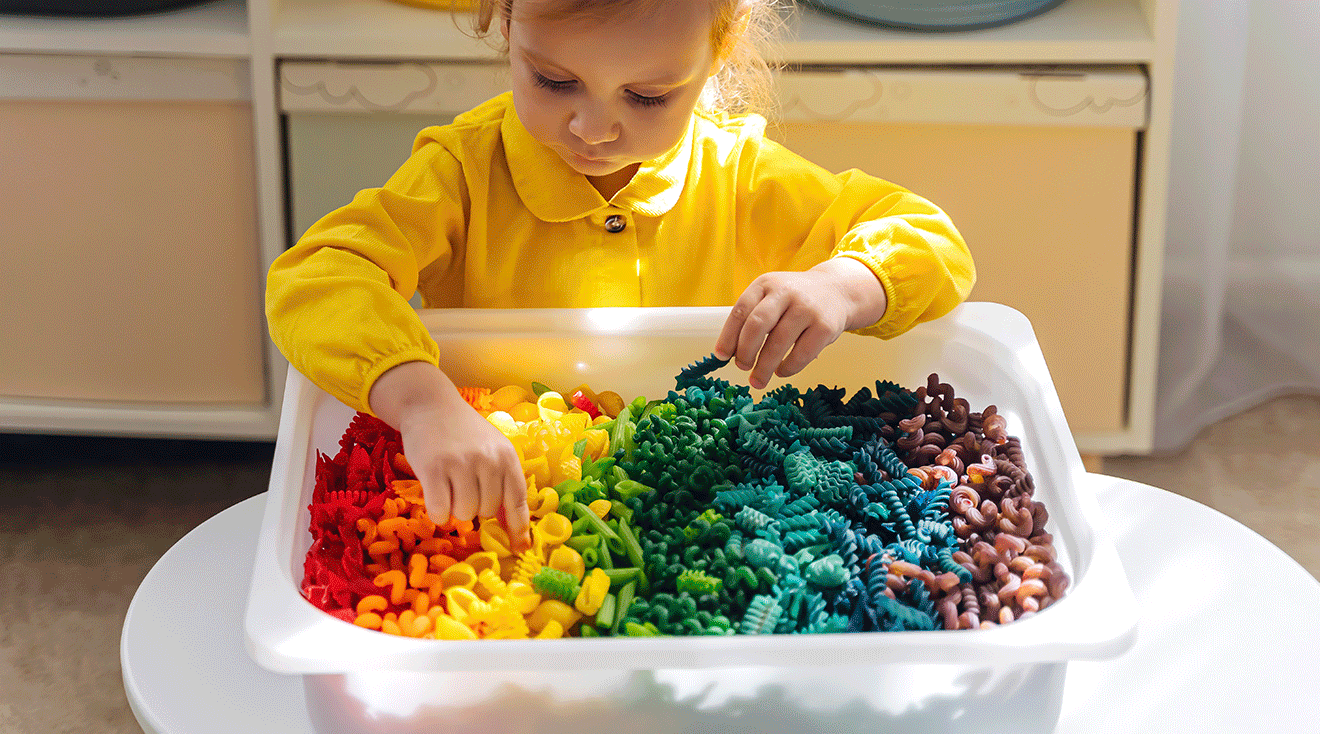
Fill a bin with uncooked penne and macaroni dyed in primary colors. Children use tongs to sort pasta into corresponding colored bowls. This activity refines pincer grasp and hand-eye coordination while reinforcing color theory. The rigid, hollow shapes offer distinct tactile feedback compared to softer materials. It creates a structured yet playful environment where sorting becomes a satisfying, repetitive motion that builds focus and fine motor precision. -
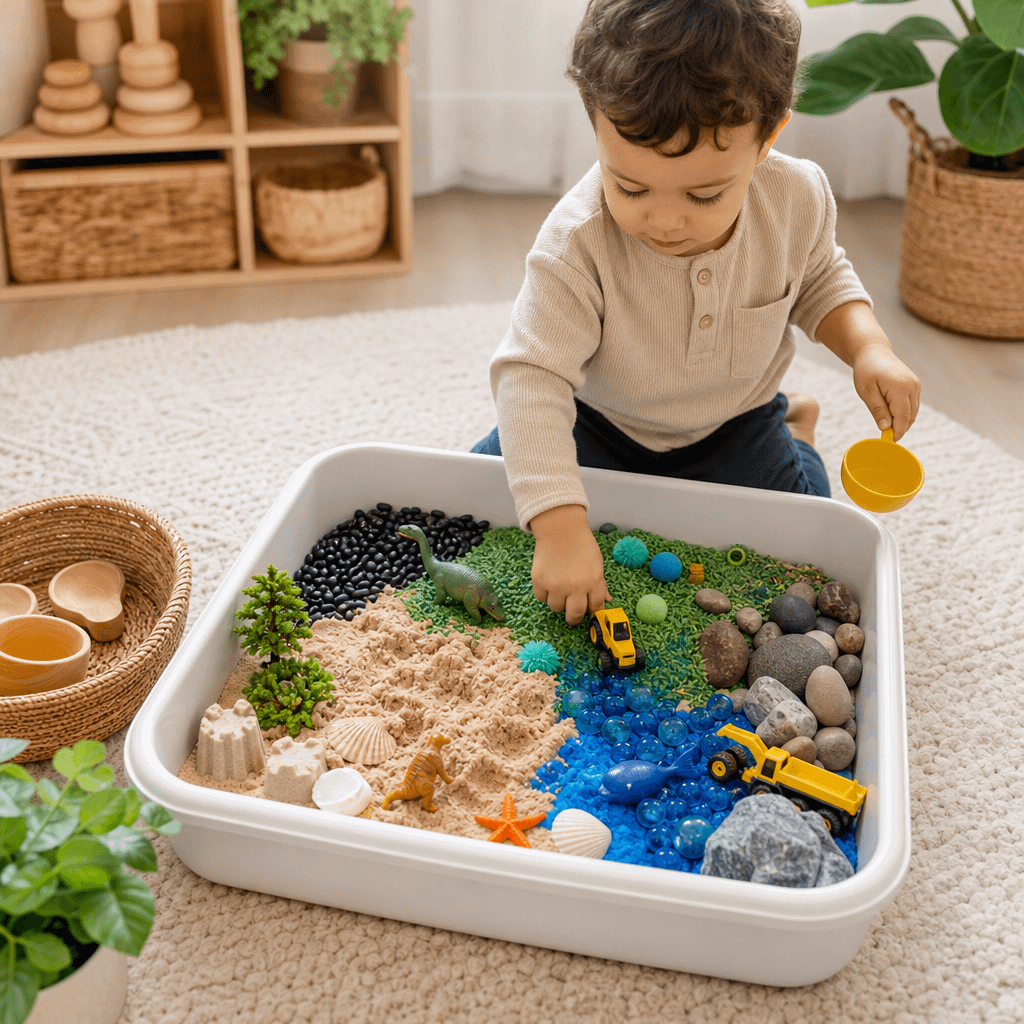
Texture matching with fabrics
Gather soft fleece, rough burlap, and smooth silk squares to create a tactile sorting challenge. Place each fabric type in a labeled basket, then invite children to match identical textures from a mixed pile. This sensory bin for preschool activities builds vocabulary like "scratchy" and "silky" while refining fine motor skills through gentle handling and precise placement of materials. -
Ice cube melting science
Freeze small plastic letters or beads inside colored ice cubes. Provide warm salt water and droppers for children to accelerate the melting process. As the ice dissolves, hidden treasures are revealed, teaching basic physics concepts about temperature and solubility. This hands-on experiment keeps young learners engaged while exploring cause-and-effect relationships in a safe, contained environment. -

Shape sorting with playdough
Prepare a large bin filled with scented playdough and various cookie cutters. Children press the cutters into the dough to create shapes, then sort them by geometric type into separate containers. This activity strengthens hand muscles needed for writing while reinforcing shape recognition. The tactile resistance of the dough provides deep pressure input, calming sensory-seeking preschoolers. -

Water play with droppers
Fill a shallow tray with colored water and provide large eye droppers or pipettes. Children transfer water between small cups, focusing on control and precision. This setup enhances hand-eye coordination and introduces early concepts of volume and measurement. The visual appeal of changing water levels keeps attention focused, making it an ideal sensory bin for preschool activities. -
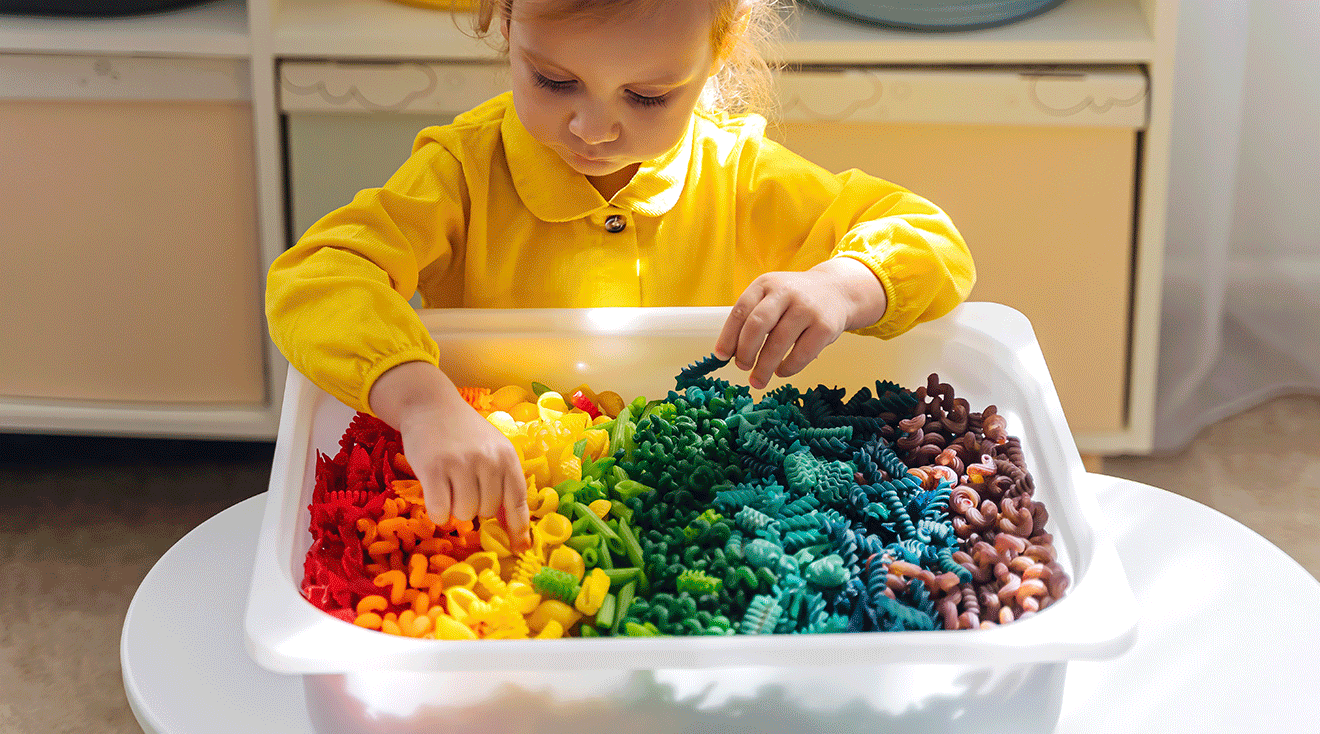
Storybook character bins
Select a popular picture book and gather related props like toy animals or miniature vehicles. Place these items in a bin alongside the book for dramatic reenactment. Children retell the story using the objects, boosting narrative skills and comprehension. This immersive approach connects literacy with tactile play, allowing preschoolers to physically interact with the characters they are learning about.
Set up safe sensory bins
Before filling your bins with themes, establish a safe and manageable workspace. This preparation ensures that preschool activities remain engaging without becoming overwhelming for little hands or cluttered spaces. Think of setup like building a foundation; if the base is solid, the learning structure stays upright.
Select a shallow, large plastic bin with low sides. This allows children to reach the bottom without tipping the container. Avoid deep buckets or small boxes that limit the sensory area. A wide base encourages exploration and keeps materials contained within the play zone.
Begin with a dry, non-toxic base like dry rice, dried beans, or kinetic sand. These materials provide resistance and texture that help develop fine motor skills. Ensure the base is deep enough (at least 2-3 inches) to hide small objects, encouraging digging and discovery.
Include large scoops, tongs, and spoons that are easy for small hands to grip. Avoid tiny items that pose choking hazards for children under three. Tools should be durable and simple, allowing the child to focus on the sensory experience rather than struggling with complex mechanisms.
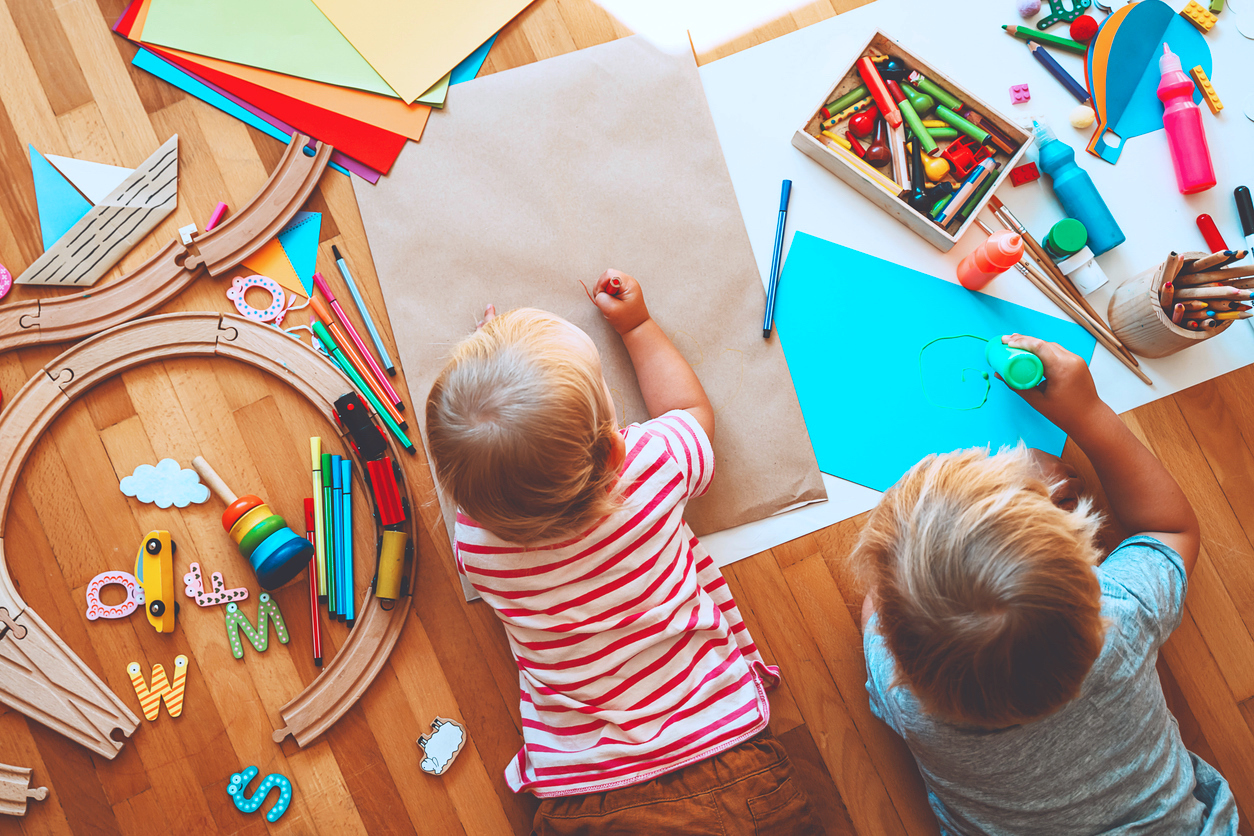
Set up the bin on a washable surface or outdoors. Keep a damp cloth nearby for quick hand wipes and a small dustpan for stray base materials. Pre-planning the cleanup process reduces stress and helps children understand that playtime has a clear beginning and end.
Quick checklist for sensory bin prep
Before inviting your child to explore, run through this final setup checklist. A few minutes of preparation turns a simple bin into a safe, engaging preschool activity that supports fine motor development and sensory processing.
- Verify non-toxic materials: Ensure all fillers (rice, beans, water beads) are age-appropriate and free of choking hazards for children under three.
- Choose a contained area: Set up the bin on a washable surface, such as a plastic tablecloth or in the bathtub, to simplify cleanup.
- Prep tools for independence: Place tongs, scoops, and cups nearby so children can begin playing without immediate adult assistance.
Once the space is ready, you can confidently introduce the theme. This structured approach helps preschool activities feel organized and educational rather than chaotic.
-
Non-toxic materials verified
-
Easy cleanup area selected
-
Tongs and scoops within reach
No comments yet. Be the first to share your thoughts!