

Spring STEM activities for preschoolers
Spring is a truly magical time for young children. Everything feels new and full of possibility, and it's a fantastic opportunity to connect learning to the world around them. This makes it a perfect season to introduce, or reinforce, STEM concepts. Children are naturally curious, and spring provides endless opportunities to explore, investigate, and discover.
Hands-on learning is particularly important for preschoolers. It’s how they make sense of the world, build problem-solving skills, and develop a lifelong love of learning. Integrating STEM into spring activities isn’t about complicated experiments; it’s about using everyday experiences – like planting seeds or observing insects – as starting points for exploration.
The benefits of early STEM exposure are significant. These activities aren't just 'fun and games'; they help develop critical thinking, creativity, and a foundation for future success in science, technology, engineering, and mathematics. These skills extend beyond those fields too, helping children approach challenges with confidence and a willingness to experiment. We've gathered 25 engaging activities to help you bring STEM to life this spring.
25 spring STEM activities
Here are 25 spring STEM activities for preschoolers, categorized by discipline. Many activities naturally blend multiple concepts. Each includes a materials list and a brief explanation of the STEM principles involved.
- Seed germination observation (Science): Plant seeds in clear cups with soil and observe growth. Materials: Seeds (beans, peas), clear cups, soil, water. STEM Concept: Life cycles, plant biology.
- Building bird nests (Engineering): Challenge children to build nests using natural materials. Materials: Twigs, leaves, grass, mud. STEM Concept: Structural engineering, material properties.
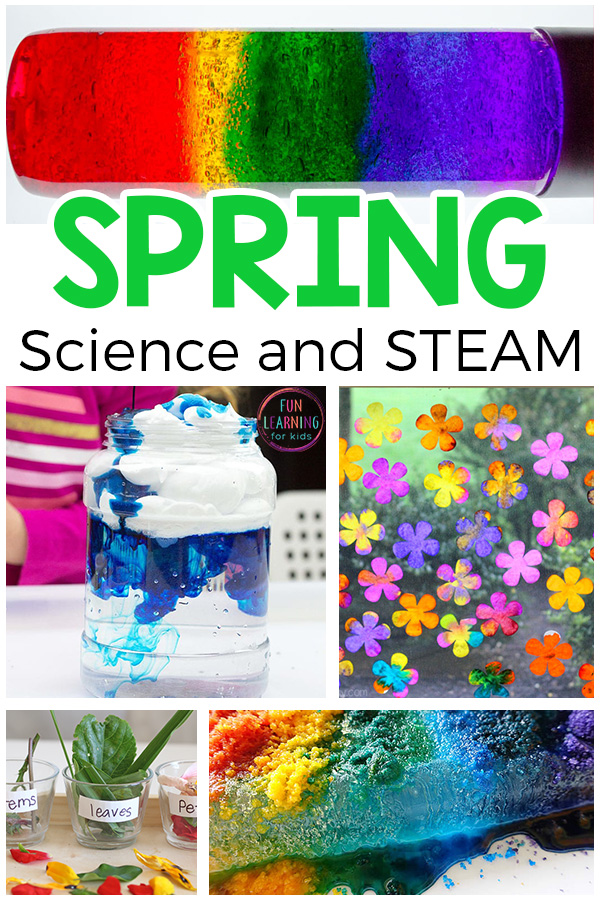
- Rainbow density tower (Science): Layer liquids of different densities (honey, corn syrup, dish soap, water, oil) to create a rainbow effect. Materials: Various liquids, clear glass or jar. STEM Concept: Density, layering, observation.
- Planting a butterfly garden (Science/Math): Plan and plant a garden to attract butterflies. Materials: Butterfly-attracting plants, soil, pots, measuring tools. STEM Concept: Plant life cycles, measurement, spatial reasoning.
- Mud kitchen creations (Engineering): Provide mud, water, and tools for children to create 'recipes' and build structures. Materials: Mud, water, pots, pans, utensils. STEM Concept: Measurement, material properties, problem-solving.
- Flower dissection (Science): Carefully dissect a flower to identify its parts. Materials: Flowers (lilies, tulips), magnifying glasses. STEM Concept: Plant anatomy, observation.
- Leaf rubbings & sorting (Science/Math): Create leaf rubbings and sort leaves by size, shape, or color. Materials: Leaves, paper, crayons, sorting trays. STEM Concept: Observation, classification, patterns.
- Rain gauge construction (Engineering/Math): Build a rain gauge to measure rainfall. Materials: Plastic bottle, ruler, rocks. STEM Concept: Measurement, data collection.
- Wind vane creation (Engineering): Construct a simple wind vane to determine wind direction. Materials: Cardboard, straw, tack, compass. STEM Concept: Weather, direction, engineering design.
- Bug hotel building (Engineering): Build a shelter for insects using natural materials. Materials: Hollow logs, bamboo, twigs, leaves. STEM Concept: Habitat, engineering design, environmental awareness.
- Nature scavenger hunt (Science/Math): Create a list of natural items for children to find. Materials: Scavenger hunt list, collection containers. STEM Concept: Observation, classification, counting.
- Floating and sinking experiment (Science): Test different natural objects to see if they float or sink. Materials: Water, tub, natural objects (rocks, leaves, twigs). STEM Concept: Buoyancy, observation.
- Worm Observation Bin (Science): Create a bin to observe worms and their behavior. Materials: Bin, soil, worms, leaves. STEM Concept: Animal behavior, decomposition.
- Bubble Science (Science): Explore the properties of bubbles using different shapes and solutions. Materials: Bubble solution, wands, containers. STEM Concept: Surface tension, shapes.
- Sun Prints (Science): Create sun prints using construction paper and objects. Materials: Construction paper, objects, sunlight. STEM Concept: Light sensitivity, observation.
- Spring Patterning (Math): Create patterns using natural materials like flowers, leaves, and stones. Materials: Natural materials, pattern cards. STEM Concept: Patterns, sequencing.
- Counting Flowers & Insects (Math): Count flowers, insects, or other natural objects. Materials: Counting tools, natural environment. STEM Concept: Counting, number recognition.
- Measuring Plant Growth (Math): Measure the growth of plants over time. Materials: Ruler, plants, recording chart. STEM Concept: Measurement, data collection.
- Building a Miniature Garden (Engineering): Design and build a miniature garden in a container. Materials: Container, soil, plants, miniature figures. STEM Concept: Design, spatial reasoning.
- Creating a Compost Bin (Science): Learn about decomposition by creating a compost bin. Materials: Compost bin, organic materials. STEM Concept: Decomposition, life cycles.
- Bird Feeder Construction (Engineering): Build a bird feeder to attract birds. Materials: Recycled materials, birdseed. STEM Concept: Engineering design, animal needs.
- Exploring Shadows (Science): Observe how shadows change throughout the day. Materials: Sunlight, objects. STEM Concept: Light, shadows, observation.
- Color Mixing with Flowers (Science): Experiment with mixing flower petals to create new colors. Materials: Flower petals, water, paper. STEM Concept: Color theory, mixing.
- Nature Collages (Art/Science): Create collages using natural materials. Materials: Natural materials, glue, paper. STEM Concept: Observation, creativity.
- Mapping the Garden (Math/Science): Create a map of the garden, including plants and features. Materials: Paper, pencils, measuring tools. STEM Concept: Spatial reasoning, mapping.
Science explorations
Let's explore the science behind some of these activities. Understanding the 'why' can deepen the learning experience. Resources like 'Let’s Talk, Read and Sing about STEM!' from acf.gov suggest building STEM skills through daily routines and conversations.
Seed Germination: This isn't just about watching a plant grow. It's about understanding the plant life cycle and the essential needs of a plant – water, sunlight, and nutrients. The process of germination is driven by stored energy within the seed, and the development of roots and shoots demonstrates a plant’s ability to respond to its environment.
Rainbow Density Tower: The different layers form because of varying densities. Density is a measure of how much mass is contained in a given volume. Honey is denser than oil, so it sinks to the bottom, while oil is less dense and floats on top. This is a great visual way to introduce the concept of density.
Worm Observation Bin: Worms are incredible decomposers, breaking down organic matter and enriching the soil. Observing their behavior – how they move, what they eat, and how they interact with their environment – teaches children about ecosystems and the importance of these often-overlooked creatures.
Exploring Shadows: Shadows are formed when an object blocks light. The size and shape of a shadow change depending on the position of the light source and the object. This activity introduces basic concepts of light and how it interacts with objects.
Safety Note: Always supervise children during science experiments. Ensure they understand the importance of not tasting anything and washing their hands after handling materials.
Engineering for young children
Engineering activities encourage children to think like problem-solvers and designers. They learn to plan, build, test, and improve their creations. The focus is on the process of experimentation and learning from mistakes, not just getting the 'right' answer.
Building Bird Nests is a fantastic example. Children must consider what materials are strong enough to hold a nest together and what shape will provide stability. They’re essentially acting as architects and engineers, designing a structure to meet specific needs.
Mud Kitchen Creations are another prime example. Children experiment with different consistencies of mud, learning about material properties and how they affect building. They also practice measuring and following 'recipes'.
Bug Hotel Building challenges children to create a welcoming habitat for insects. This requires thinking about the insects’ needs – shelter, food, and a safe place to live. It's a wonderful way to connect engineering with environmental awareness. Emphasize that failure is part of the process. If a structure collapses, encourage children to analyze what went wrong and try again.
Math in nature
Math is all around us in nature. These activities help children see math in a concrete and engaging way. Resources like ABCmouse.com offer hands-on STEM activities, many focusing on math concepts.
Counting Flowers & Insects is a simple but effective way to practice counting skills. Encourage children to count carefully and to organize their findings. Measuring Plant Growth introduces the concept of measurement and data collection. Children can track the growth of plants over time, using a ruler to measure height and recording their observations.
Leaf Rubbings & Sorting combines math with science. Children can sort leaves by size, shape, or color, practicing classification skills. Creating Spring Patterning activities with natural materials helps children understand patterns and sequencing. These are foundational skills for more advanced math concepts.
Simple technology tools
Technology doesn’t have to mean screens all the time. Simple tools can enhance STEM learning. A digital camera can be used to document observations – a flower’s growth, a bug’s behavior, or the construction of a bird nest. This encourages careful observation and record-keeping.
Tablets can be used to research plants and animals, or to identify birdsong using apps. Creating a digital nature journal allows children to combine their observations with technology, creating a lasting record of their discoveries. Remember to emphasize responsible technology use and set appropriate screen time limits.
Adapting activities for different learners
Every child learns differently. It’s important to adapt activities to meet individual needs and interests. For children who need extra support, simplify the activity or provide more guidance. For example, with seed germination, you might pre-plant some seeds and have the child focus on observing the growth.
For children who are ready for a challenge, extend the activity. With the bird nest building, you could ask them to design a nest for a specific type of bird. Consider children with sensory sensitivities. Some materials, like mud or certain plants, might be overwhelming. Offer alternatives or allow them to participate in a modified way.
Offer a variety of materials and allow children to choose what interests them. Provide opportunities for both individual and collaborative work. Remember to focus on the process of learning, not just the end result.
Outdoor STEM safety
Safety is paramount for outdoor STEM activities. Always supervise children closely and ensure they understand potential hazards. Use sun protection like hats.creen, and appropriate clothing are a must. Insect repellent can help prevent bug bites.
Teach children to identify poisonous plants and to avoid touching them. Check for allergies before handling plants or insects. Emphasize the importance of respecting nature and leaving the environment as they found it. A quick check of the area for potential hazards – broken glass, sharp objects – is always a good idea.

No comments yet. Be the first to share your thoughts!