

Spring's Arrival: STEM in Bloom
Spring is a great time to introduce young children to STEM. It's a season of visible change, perfect for observation and exploration. The Administration for Children and Families notes that children are naturally curious from birth, and spring nurtures that curiosity.
Nature is a great teacher. A walk outside can become a lesson in botany, meteorology, or engineering when children ask questions and investigate. We often think of STEM as complex, but for preschoolers, it's about the basics: noticing patterns, comparing sizes, and figuring out how things work.
Hands-on learning works well at this age. Instead of just telling children about science, let them experience it. Connecting classroom concepts to the real world makes learning more meaningful. A seed isn't just a seed; it's a potential plant, a source of food, and a miniature engineering marvel.
This isn't about pushing preschoolers to become scientists or engineers. It's about giving them tools to think critically, solve problems, and develop a love of learning. It's about fostering wonder and encouraging them to ask, 'Why?' and 'How?'
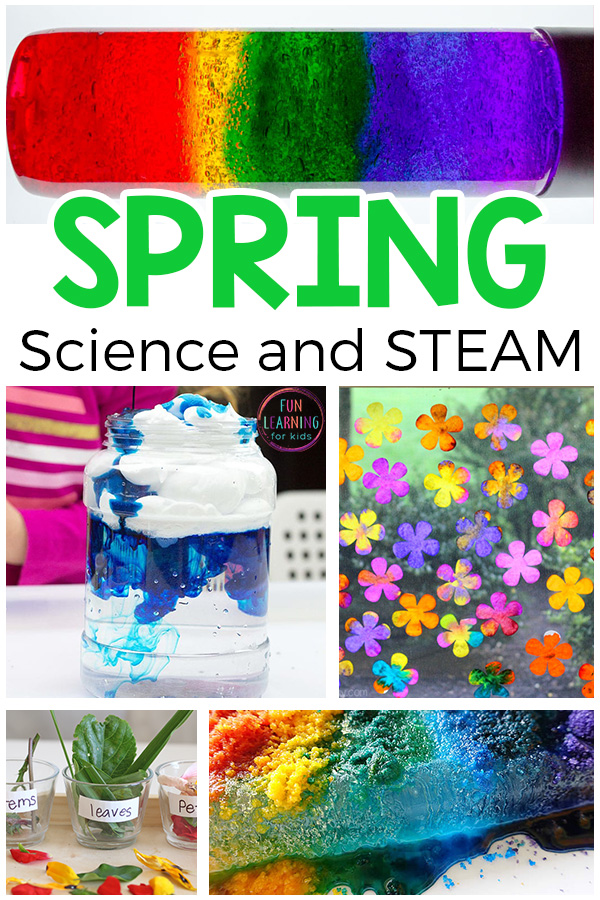
20 Nature-Based STEM Projects
Here are 20 STEM activities using the natural world in springtime. These projects are for preschoolers and use common materials. They vary in complexity. Always supervise children during these activities and adapt them based on their needs.
- Bird Nest Building: Gather twigs, leaves, and grasses to construct bird nests. Discuss different bird species and their nesting habits (engineering, observation).
- Seed Germination Experiment: Plant seeds in clear cups with soil and observe their growth over time. Discuss the needs of plants (science, observation).
- Nature Collage: Collect leaves, flowers, and other natural materials to create collages. Explore patterns, colors, and textures (art, pattern recognition).
- Rain Gauge Creation: Build a simple rain gauge using a plastic bottle and ruler to measure rainfall. Record and compare data over several days (math, data collection).
- Fairy House Construction: Use natural materials to build miniature houses for fairies or other imaginary creatures (engineering, design).
- Leaf Rubbings: Place leaves under paper and rub with crayons to create textured images. Discuss leaf shapes and patterns (art, observation).
- Flower Dissection: Carefully dissect flowers to examine their different parts. Discuss pollination and the life cycle of plants (science, observation).
- Mud Kitchen Creations: Create a mud kitchen using pots, pans, and utensils. Experiment with mixing mud and water to create different textures (science, sensory play).
- Rock Sorting and Classification: Collect rocks of different sizes, shapes, and colors. Sort and classify them based on various characteristics (math, observation).
- Bug Hotel Building: Create a bug hotel using natural materials to provide shelter for insects. Discuss the importance of insects in the ecosystem (science, observation).
- Wind Vane Construction: Build a simple wind vane to determine wind direction. Discuss weather patterns and the effects of wind (science, engineering).
- Nature Scavenger Hunt: Create a list of natural items for children to find on a scavenger hunt. Encourage observation and exploration (science, observation).
- Planting Seeds: Plant seeds in pots or a garden. Discuss the life cycle of plants and the importance of caring for them (science, responsibility).
- Composting Investigation: Start a small compost bin and observe the decomposition process. Discuss the importance of recycling and reducing waste (science, environmental awareness).
- Water Transportation Challenge: Provide materials like sponges, cups, and containers and challenge children to transport water from one place to another (engineering, problem-solving).
- Shadow Tracing: Trace the shadows of objects in the sunlight. Discuss how shadows change throughout the day (science, observation).
- Flower Pressing: Press flowers between the pages of a book to preserve them. Discuss the process of dehydration and the beauty of flowers (science, art).
- Nature Art with Mud: Use mud as paint to create artwork on rocks, paper, or other surfaces. Explore textures and colors (art, sensory play).
- Building with Sticks: Use sticks to build structures like forts, bridges, or towers. Discuss structural integrity and engineering principles (engineering, problem-solving).
- Creating a Nature Mandala: Arrange natural materials in a circular pattern to create a mandala. Explore symmetry and patterns (art, math).
Digging Deeper: Standout Projects
Let's look closer at a few of these projects, expanding on instructions and suggesting ways to extend learning. These projects generate excitement and offer educational opportunities. The goal isn’t a perfect outcome, but the process of exploration and discovery.
Seed Germination Experiment: Beyond planting seeds, discuss different types – bean, sunflower, pumpkin. What’s different about them? How might those differences affect growth? Keep a daily journal with drawings and observations. What happens if one seed is in a dark place and another in sunlight? If seeds don’t sprout, check moisture and temperature.
Rain Gauge Creation: This project introduces basic measurement skills. Use a clear plastic bottle with the bottom cut off, inverted into the top. Mark measurements with a permanent marker. Discuss units of measurement (inches, centimeters). Create a graph to track rainfall over a week or month. What does this data tell us about the weather?
Bug Hotel Building: This encourages children to think about the needs of living creatures. Use hollow stems, pine cones, twigs, and leaves to fill a small wooden frame or container. Talk about the different insects that might visit and what they eat. This project also opens discussions about habitat and conservation.
Fairy House Construction: This is less about scientific accuracy and more about imaginative design and problem-solving. Encourage children to think about what a fairy might need in a house – shelter, a kitchen, a bedroom. What materials would be best for building these features? This fosters creativity and spatial reasoning.
Wind Vane Construction: A simple wind vane can be made from cardboard, a straw, and a pin. Attach a cardboard arrow to the straw and balance it on the pin. Discuss how the arrow points in the direction the wind is coming from. This introduces weather and directional concepts.
Adapting for Different Learners
Every child learns differently, so adapt these projects to meet individual needs. Some children may excel at fine motor skills while others struggle. Provide options for assistance, such as pre-cut materials or larger tools. For children who need more of a challenge, encourage them to design their own variations of the projects.
For children with disabilities, consider modifications to ensure accessibility. A child with limited mobility might not be able to participate in a scavenger hunt, but they could still observe and classify natural materials from a seated position. Providing alternative materials, like textured paint for children with visual impairments, can be helpful.
Encourage collaboration and peer learning. Pair children with different skill sets so they can support each other. This promotes social-emotional development and allows children to learn from one another. The process of learning is just as important as the outcome.
Safety First: Outdoor Exploration
Outdoor exploration is a valuable learning experience, but safety should be the top priority. Before heading outside, discuss potential hazards with the children, such as poisonous plants (like poison ivy or oak), insects (bees, wasps, ticks), and uneven terrain. Teach them to avoid touching unknown plants and to be aware of their surroundings.
Adult supervision is essential. Always accompany children on outdoor activities and ensure they stay within sight. Remind them to wash their hands thoroughly after handling soil, plants, or insects. Check for ticks after spending time outdoors.
Teach children about responsible interaction with nature. Emphasize respecting living creatures and their habitats. Avoid disturbing plants or animals unnecessarily. Leave no trace – pack out everything you pack in.
Extending the Learning: Beyond the Craft
Learning doesn't have to stop when the craft activity is finished. Connect the activities to other curriculum areas and everyday life. Read books about plants, animals, or weather. Watch educational videos about nature. Take field trips to nature centers, gardens, or parks.
For example, after building bird nests, read a book about different bird species or learn about bird migration patterns. After the seed germination experiment, discuss where our food comes from and the importance of agriculture. Encourage children to observe nature in their own backyards or neighborhoods.
Websites like Pinterest (pinterest.com) are a great source of inspiration for additional STEM activities and ideas. Preschool Playbook (preschoolplaybook.com) also offers a wealth of resources for preschool teachers and parents. The key is to foster a lifelong love of learning and curiosity about the world around us.
Resources & Inspiration
Looking for more ideas and resources? The Administration for Children and Families (ACF) offers valuable tips for incorporating STEM into preschool learning:
Preschool Playbook (preschoolplaybook.com) is another excellent resource for preschool activities, crafts, and educational materials. You’ll find a wide range of ideas to engage young learners and support their development. Remember to always adapt activities to suit the individual needs and interests of the children in your care.

No comments yet. Be the first to share your thoughts!