

Bringing Montessori Home
The Montessori approach centers on a child’s natural desire to learn. Developed by Dr. Maria Montessori, it emphasizes independence, freedom within limits, and respect for a child’s developmental pace. Parents can foster these qualities at home without a fully equipped classroom.
The core of Montessori is the 'prepared environment' – a space arranged to encourage exploration and self-directed learning. This means offering accessible materials that invite engagement, such as low shelves with carefully selected toys, child-sized furniture, and real-life tools. The adult’s role shifts from director to guide, observing and offering support when needed.
A common misconception is that Montessori is a "hands-off’ approach. It’s about providing a structured environment with clear boundaries, allowing children to choose activities that align with their interests and developmental needs. Another misunderstanding is that it"s expensive. While some Montessori materials can be pricey, many can be made at home or sourced affordably.
Bringing Montessori home means adapting the philosophy to fit your family's lifestyle. Create a space where your child feels empowered to learn, explore, and grow at their own pace. It’s a rewarding journey of observation and adaptation.
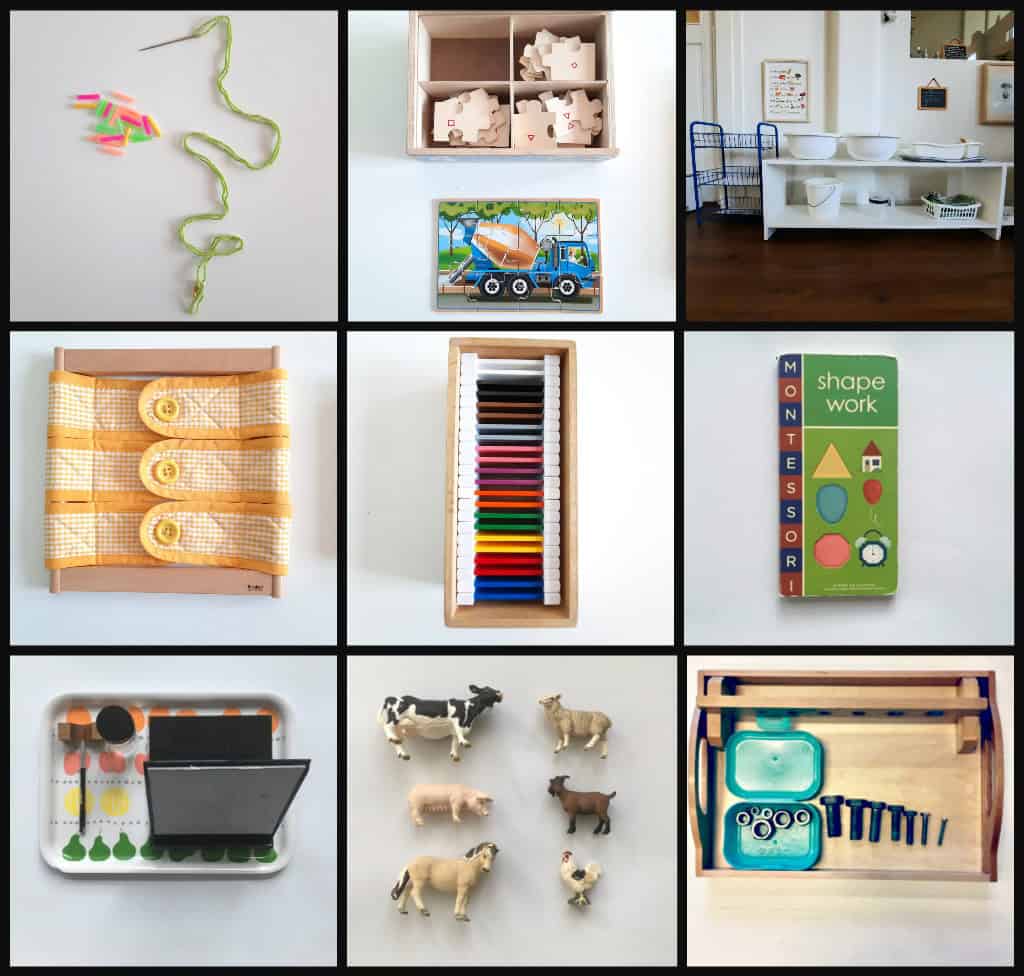
Practical Life: Skills for Everyday
Practical life activities are central to the Montessori approach, especially for younger children. They develop concentration, coordination, independence, and a sense of responsibility. These are often the first activities children encounter in a Montessori classroom.
Pouring is a good starting point. Begin with dry materials like beans or rice, using small pitchers and containers. Gradually introduce water, emphasizing carefulness and control. Scooping with spoons and tongs builds fine motor skills. Sorting activities by color, shape, or size encourage classification and problem-solving. These activities lay a foundation for more complex learning.
Dressing frames are a classic Montessori material, but you can create variations at home. Practice buttoning, zipping, snapping, and tying. Food preparation is also a valuable practical life skill. With supervision, children can help with washing vegetables, peeling fruit, spreading butter, or setting the table. Start with age-appropriate tasks and provide close guidance.
As your child grows, adapt these activities to increase the challenge. Introduce more complex pouring setups, intricate sorting tasks, or advanced food preparation techniques. Observe your child and provide activities just beyond their current skill level, encouraging continued learning.
- Pouring: Begin with dry materials, then introduce water with supervision.
- Scooping: Use spoons and tongs to develop fine motor skills.
- Sorting: Categorize items by color, shape, or size.
- Dressing Frames: Practice buttoning, zipping, and other fasteners.
- Food Preparation: Involve children in age-appropriate cooking tasks.
Sensorial Exploration: Engaging the Senses
Montessori materials refine the senses, helping children become more aware of their surroundings and discriminate between different qualities. This builds a foundation for abstract thinking by isolating one quality at a time, allowing the child to focus and understand the concept.
You don’t need to invest in expensive materials to create sensorial experiences at home. Scent jars filled with spices like cinnamon, cloves, or vanilla can help children develop their sense of smell. Sound cylinders, made with identical containers filled with varying amounts of rice or beans, refine auditory discrimination. Texture boards with different fabrics glued onto a surface engage the sense of touch.
Color sorting activities are effective. Use colored blocks, beads, or household objects. Present the materials in a way that encourages exploration and discovery. For example, instead of simply asking the child to sort the colors, you might say, “I wonder what you’ll do with these?”
Many Montessori sensorial materials are self-correcting, allowing the child to independently identify their own errors. This builds confidence and encourages persistence. For example, a pink tower, with its ten pink cubes of varying sizes, allows the child to visually see if they have placed the cubes in the correct order. This self-discovery is a learning tool.
Sensorial Exploration at Home
- Dried Beans & Rice - Offer a variety of dried beans (kidney, pinto, black) and rice (white, brown, wild) for pouring and scooping activities. This develops fine motor skills and introduces different textures.
- Spices - Cinnamon, nutmeg, cloves, and allspice provide distinct scents for smelling jars. This encourages discrimination of subtle differences and vocabulary building.
- Metal & Wooden Utensils - Provide a metal spoon and a wooden spoon. Encourage your child to explore the different sounds they make when tapped on various surfaces. This highlights sound variations.
- Fabric Swatches - Collect squares of different fabrics (silk, cotton, wool, corduroy). Children can explore the textures through touch, learning descriptive words like smooth, rough, and soft.
- Water & Ice - A simple container of water with ice cubes allows children to observe changes in state and explore temperature differences. Supervise closely!
- Sandpaper Squares - Different grits of sandpaper (available at hardware stores like Lowe's or Home Depot) provide varying degrees of roughness for tactile discrimination.
- Citrus Fruits - Oranges, lemons, and limes offer varying scents and textures. Peeling (with assistance) and smelling introduces different aromas and tactile experiences.
Language & Early Literacy at Home
Supporting language development within a Montessori framework means creating a rich linguistic environment and providing opportunities for exploration and expression. Talk often, read aloud, and encourage storytelling. Respond to your child’s attempts to communicate, even if their pronunciation isn't perfect.
Sandpaper letters are a classic Montessori material for introducing the alphabet. The tactile experience of tracing the letters with their fingers helps children connect the shape and the sound. You can make your own by tracing letters onto sandpaper and gluing them to cardboard. Object labeling is another simple activity. Label common household items with their names, helping children associate words with objects.
Read aloud often. Choose books with engaging stories and beautiful illustrations. Encourage your child to participate by asking questions and pointing out familiar objects. Storytelling also fosters language development. Encourage your child to create their own stories, even simple ones.
The role of sight words in a Montessori approach is nuanced. Some educators focus on phonetic awareness – teaching children to decode words based on their sounds – rather than memorizing sight words. Others believe a balanced approach is best. Experimenting to see what works best for your child is the most useful approach.
Math Foundations: Beyond Counting
Montessori math isn’t about rote memorization of numbers and formulas. It’s about understanding the underlying concepts of mathematics – quantity, sequencing, and relationships. Make math concrete and accessible to young children to build a strong foundation for future mathematical learning.
Number rods help children visualize quantities. The rods vary in length, representing the numbers one through ten. Spindle boxes help children associate numerals with quantities by placing spindles into compartments labeled with numbers. Cards & counters allow children to represent numbers using physical objects.
These materials help children understand that the number five, for example, represents a specific quantity – five objects. They develop a sense of number and build a foundation for more complex mathematical concepts like addition and subtraction. Introduce early geometry concepts with shape sorters and puzzles.
Follow the child’s pace and interest. Don’t push them to move on to the next activity until they have fully grasped the current concept. Observe their engagement and adjust the activities accordingly. Math should be a joyful exploration, not a source of frustration.
Comparing Montessori Math Materials
| Material | Skill Developed | Age Range | Materials Needed | Preparation Time |
|---|---|---|---|---|
| Number Rods | Quantity discrimination, seriation (ordering by length), pre-decimal system concepts | 3-6 years | Ten rods, each divided and colored to represent numbers 1-10 | Low - arranging the rods in order. |
| Spindle Boxes | Number recognition, associating numerals with quantity, one-to-one correspondence | 3-6 years | Boxes labeled with numerals 0-9, spindles (small wooden pieces) | Low - placing the correct number of spindles into each box. |
| Cards & Counters | Number recognition, quantity, understanding the symbolic representation of numbers | 3-6 years | Numbered cards (typically 0-19), counters (small objects like beads or stones) | Low to Moderate - preparing cards and ensuring enough counters are available. |
| Sandpaper Numerals | Number recognition, associating numeral shape with sound | 3-6 years | Sandpaper numerals (0-9), a mat for presentation | Low - ensuring numerals are securely attached to cards. |
| Golden Beads | Understanding the decimal system (units, tens, hundreds, thousands) | 6-9 years (can be introduced earlier for quantity concepts) | Golden unit beads, ten beads, hundred beads, thousand beads | Moderate - organizing beads into separate containers. |
| Teen Board | Introduction to teen numbers (11-19), understanding composition of numbers | 4-6 years | Board with recessed spaces for beads representing 11-19, blue beads for tens, red beads for units | Moderate - setting up the board with the correct number of beads for each teen number. |
Illustrative comparison based on the article research brief. Verify current pricing, limits, and product details in the official docs before relying on it.
20 Montessori Activities to Try Today
undefined right away. These activities are designed to be engaging, educational, and accessible, using materials you likely already have on hand.
These are selected to cover a variety of developmental areas and age ranges. Remember to observe your child and adapt the activities to their individual needs and interests. Don't feel pressured to do all 20 at once! Start with a few that seem most appealing and build from there.
- Pouring Station (2-4 years): Dry beans, small pitchers, containers.
- Scooping with Tongs (2-5 years): Pom-poms, tongs, bowls.
- Color Sorting (2-4 years): Colored blocks, beads, or toys.
- Buttoning Frame (3-5 years): Fabric scraps, buttons, cardboard.
- Zipping Frame (3-5 years): Fabric scraps, zippers, cardboard.
- Scent Jars (3-6 years): Small jars, spices (cinnamon, vanilla).
- Sound Cylinders (3-6 years): Identical containers, rice/beans.
- Texture Board (2-4 years): Cardboard, various fabrics.
- Sandpaper Letters (3-5 years): Sandpaper, cardboard, glue.
- Object Labeling (2-5 years): Sticky notes, household objects.
- Reading Aloud (All ages): Picture books, engaging stories.
- Storytelling (All ages): Encourage imaginative narratives.
- Number Rods (3-6 years): (Can be DIYed with cardboard).
- Spindle Boxes (3-6 years): (Can be DIYed with cardboard and spindles).
- Cards & Counters (3-6 years): Cards with numbers, small objects.
- Shape Sorter (2-4 years): Shape sorter toy.
- Puzzle Solving (2-5 years): Simple jigsaw puzzles.
- Washing Dishes (3-6 years): Child-sized basin, soap, sponge.
- Setting the Table (3-6 years): Child-sized plates, cutlery.
- Planting Seeds (4-6 years): Potting soil, seeds, small pots.
Troubleshooting & Common Challenges
Implementing Montessori at home isn’t always easy. It requires patience, observation, and a willingness to adapt. You’ll likely encounter challenges along the way. Messiness is a common concern. It’s important to remember that a little mess is a natural part of the learning process. Focus on creating designated areas for activities and teaching your child to clean up afterwards.
Child resistance can also be frustrating. If your child isn’t interested in an activity, don’t force it. Observe what does capture their attention and offer activities that align with their interests. Lack of time is another common obstacle. Start small. Even 15-20 minutes of focused Montessori-inspired activity can make a difference.
Adapting to different learning styles is crucial. Every child learns differently. Some children are visual learners, while others are kinesthetic learners. Experiment with different materials and activities to find what works best for your child. Don't be afraid to modify activities to meet their individual needs.
Observation is key. Pay attention to your child’s interests, strengths, and challenges. This will help you create a prepared environment that supports their development. Remember, Montessori is a journey, not a destination. Be patient, be flexible, and enjoy the process.
What is your biggest challenge when trying to implement Montessori principles at home?
Every family's Montessori journey looks a little different. We want to hear from you so we can create resources that address the real hurdles parents and caregivers face when fostering independent learning at home. Vote below and share your experience with our community!
Resources & Further Learning
If you’re eager to. Websites like northendmontessori.com and montessoriacademy.com.au offer valuable information about the philosophy and practical implementation. YouTube channels, such as Montessori With Sonia (), provide visual demonstrations of activities.
Several books offer comprehensive guides to Montessori education. The Montessori Toddler by Simone Davies is a popular choice for parents of young children. Local Montessori schools often offer parent workshops and classes. Many online courses are also available, providing in-depth training on the Montessori method.
For Montessori materials, consider companies like Nienhuis Montessori and Alison’s Montessori. However, remember that you can create many materials yourself using readily available supplies. The most important thing is to create a learning environment that is stimulating, engaging, and supportive of your child’s natural curiosity.

No comments yet. Be the first to share your thoughts!