

Spring science for preschoolers
Spring offers a natural way to introduce preschoolers to science. The world around us changes visibly – buds appear on trees, flowers bloom, and animals emerge after winter. These changes give young children chances to ask questions and explore how things work.
Introducing science to preschoolers doesn't require complicated equipment or rigorous testing. The goal is to encourage curiosity. Early STEM exposure isn't about creating future scientists; it's about developing critical thinking skills and a lifelong love of learning.
Focus on the process of discovery, not just the 'right' answer. Letting a child experiment, observe, and ask 'what if?' is more valuable than a perfectly executed experiment. Spring provides a natural backdrop for this exploration.
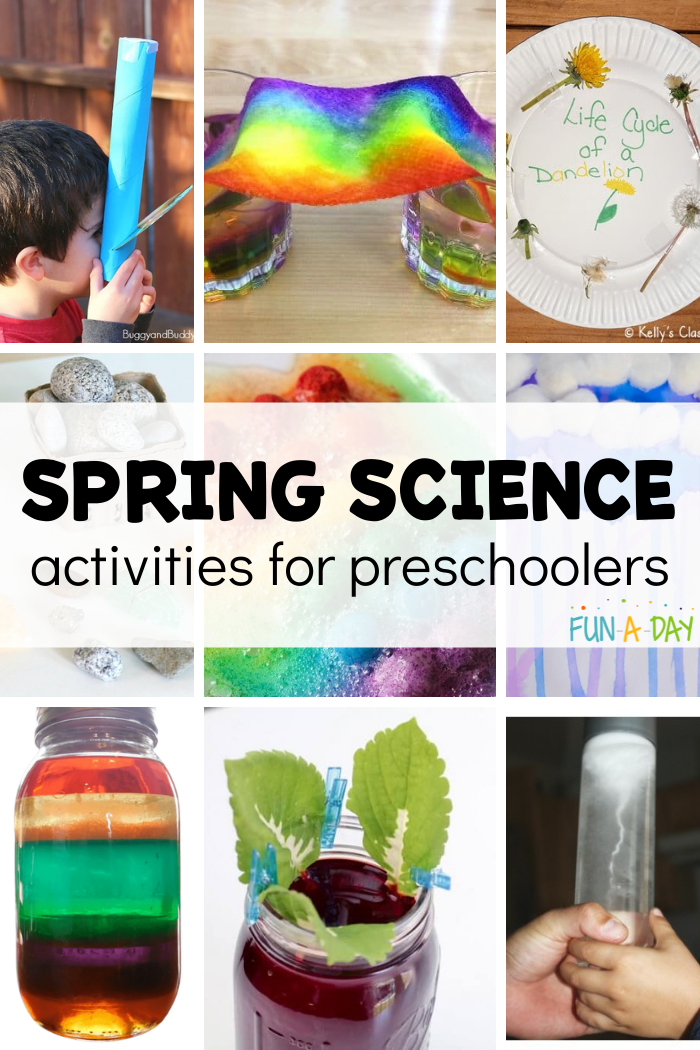
12 Spring Science Activities
Here are some hands-on science activities for preschoolers this spring. These experiments are simple, safe, and engaging, using materials you likely already have around the house.
1. Rainbow Flowers: Demonstrate capillary action by placing white flowers in colored water. You’ll see the colors travel up the stems, changing the flower petals! Materials: white flowers (carnations work well), food coloring, water, vases.
2. Seed Germination in a Bag: Observe the life cycle of a plant by germinating seeds in a plastic bag. Tape the bag to a window and watch the roots and sprouts emerge. Materials: seeds (bean seeds are great), plastic bag, paper towel, water.
3. Baking Soda and Vinegar "Volcano" with a Spring Twist: Create a classic volcano using baking soda and vinegar, but decorate it with flowers and greenery to give it a spring theme. Materials: baking soda, vinegar, dish soap, food coloring, plastic bottle, flowers, leaves.
4. Bird Nest Building: Explore engineering and animal habitats by building a bird nest using natural materials. Discuss what birds need to build a safe and sturdy nest. Materials: twigs, leaves, grass, yarn, mud.
5. Sink or Float with Spring Items: Investigate density by testing whether different spring items sink or float in water. Use flowers, leaves, small stones, and plastic eggs. Materials: water, container, various spring items.
6. Rain Cloud in a Jar: Demonstrate condensation and the water cycle by creating a rain cloud in a jar. Materials: shaving cream, water, food coloring, jar.
7. Color Mixing with Flowers: Explore color theory by mixing different colored flower petals with water. Observe how the colors combine to create new shades. Materials: flower petals, water, containers.
8. Growing Crystals: Introduce basic chemistry by growing borax crystals on pipe cleaners. This takes a little patience, but the results are stunning. Materials: borax, hot water, pipe cleaners, jar.
9. Bug Observation Station: Encourage observation skills by creating a bug observation station. Use a clear container with air holes to safely observe insects. Materials: clear container, magnifying glass, leaves, twigs.
10. Mud Kitchen Explorations: Mud kitchens are fantastic for exploring states of matter. Experiment with adding water, sand, and other materials to create different textures. Materials: mud, water, sand, leaves, pebbles, containers.
11. Making a Sundial: Learn about time and shadows by creating a simple sundial. Use a stick and mark the shadows throughout the day. Materials: stick, open space, marker.
12. Building a Mini Greenhouse: Investigate what plants need to grow by building a mini greenhouse using a plastic container. Materials: plastic container, soil, seeds, water.
Flower power experiment
The rainbow flower experiment beautifully illustrates capillary action, which is how plants draw water up from the roots to the leaves. Think of the stem as being filled with tiny straws. Water is attracted to the walls of these straws, and it climbs upwards, even against gravity. This is how plants "drink"!
Different flowers absorb color differently. Carnations tend to work really well because they have many tiny vessels that readily take up the colored water. You might notice some flowers absorb color more quickly or intensely than others – this is a great opportunity to discuss variations and ask 'why do you think that is?'
With adult supervision, you can even carefully dissect a flower to examine the stem and observe the tiny vessels responsible for carrying water. This is a fantastic way to make the invisible process of capillary action more concrete. It's also a great time to discuss the different parts of a flower – petals, stem, leaves, and roots.
Mud kitchen and states of matter
Don't underestimate the power of a mud kitchen as a science center! Playing with mud is far more than just messy fun; it’s a fantastic way for preschoolers to explore the states of matter – solid, liquid, and gas.
Dirt is a solid, but when you add water, it transforms into liquid mud. This is a clear demonstration of how adding energy (in the form of water) can change the state of a substance. Leave the mud in the sun, and you’ll see it slowly return to a solid state as the water evaporates – another change in state!
Encourage children to experiment with adding different materials to the mud – sand, leaves, pebbles, even small toys. This allows them to explore texture, mixing, and how different materials interact. The key is to let them lead the exploration and ask questions. It's play that is also a valuable learning experience.
Experiment safety guidelines
Safety is paramount when conducting science experiments with preschoolers. Adult supervision is always required. Never leave children unattended during an experiment.
Ensure all materials are non-toxic and age-appropriate. Be aware of any allergies children may have. For example, if using flowers, check for pollen allergies. Always have a first-aid kit readily available.
Teach children how to handle tools safely, such as scissors or magnifying glasses. Demonstrate proper techniques and supervise their use. Emphasize the importance of safe disposal of materials. Wash hands thoroughly after each experiment.
- Always supervise children.
- Use non-toxic materials.
- Be aware of allergies.
- Teach safe tool handling.
- Ensure proper disposal.
- Wash hands thoroughly.
Extending the learning
Don't let the learning stop when the experiment is over! Extend the exploration with related books, songs, or art projects. After the seed germination experiment, read a book about the plant life cycle, like The Tiny Seed by Eric Carle.
Encourage children to ask questions and explore their own ideas. What happens if we use different types of seeds? What if we plant the seeds in different locations? What if we add fertilizer? These are all great starting points for further investigation.
Consider creating a simple science journal where children can draw what they observe, write down their questions, and record their findings. Even just letting them draw a picture of the experiment is a great way to reinforce their learning. It doesn’t have to be fancy – the goal is to encourage observation and documentation.
Troubleshooting common issues
Not every experiment will work perfectly the first time, and that’s okay! It’s an opportunity to learn about problem-solving and resilience. If seeds don’t germinate, check the temperature, moisture level, and seed quality. Sometimes seeds just need a little more time.
If the baking soda and vinegar volcano doesn’t erupt, make sure you’re using enough of each ingredient and that the vinegar is fresh. A little dish soap can help create more bubbles. If the crystals don’t grow, ensure the water is hot enough and the solution is saturated with borax.
The important thing is to approach these setbacks as learning opportunities. Ask children, “What do you think went wrong?” and “What could we try differently next time?” This encourages critical thinking and a growth mindset.
Resources for more ideas
For more spring-themed science activities and resources, check out Preschool Play and Learn (). Pinterest also has a wealth of ideas, including themed science experiments like this zoo science activity ().
You can also find excellent resources at PreKinders (). And don’t forget to explore other articles on Preschool Playbook for more ideas on hands-on learning and early childhood education.
No comments yet. Be the first to share your thoughts!