

How we picked the activities
We selected these activities based on two simple criteria: the materials must be common household items, and the tasks must support core preschool learning goals like counting, sorting, and cause-and-effect. We avoided expensive kits or specialized toys to keep the barrier to entry low for any family.
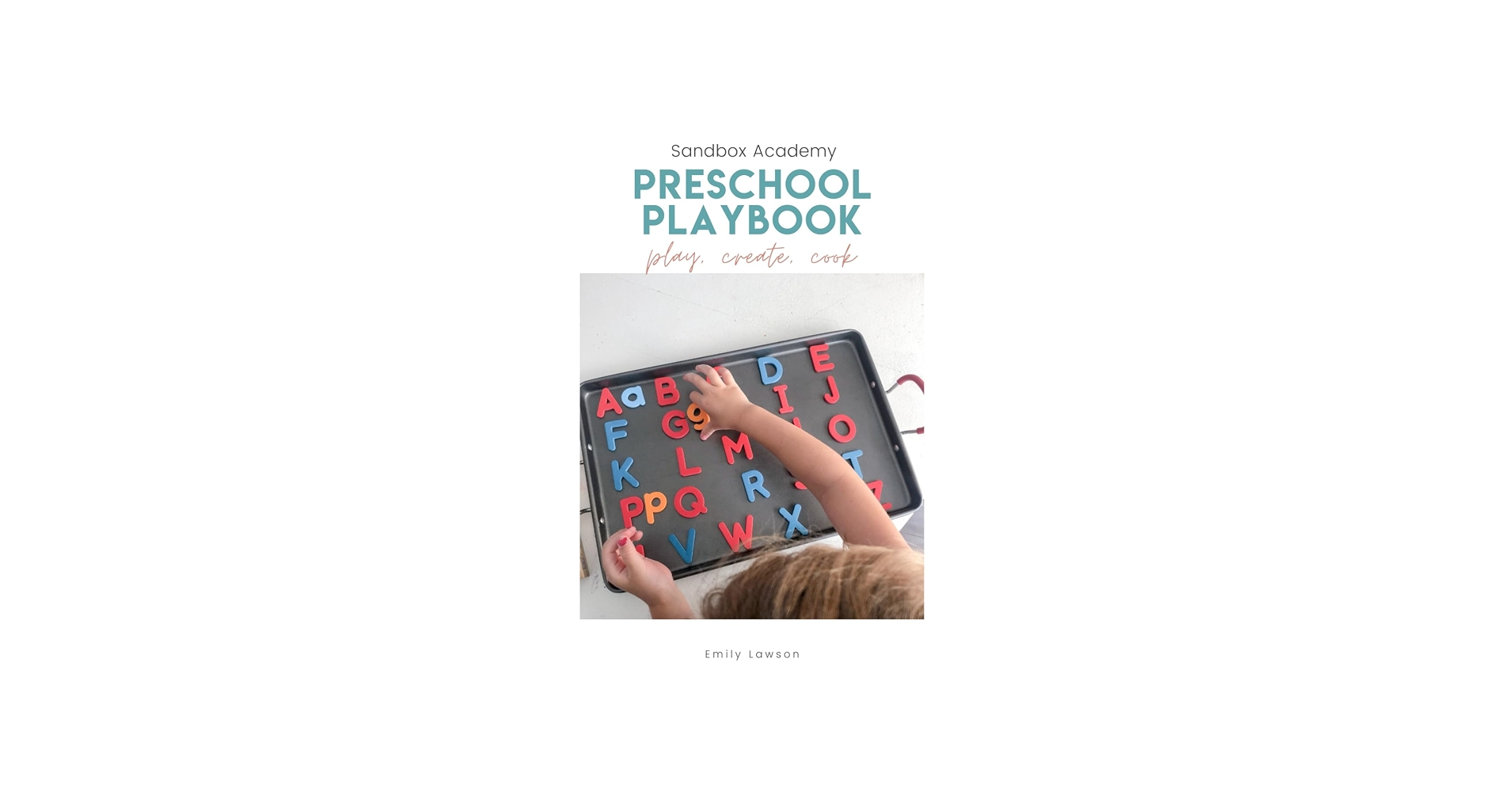
Our selection process drew from established play-based curricula like The Preschool Playbook and Playing Preschool, which emphasize hands-on exploration over passive screen time. We filtered out ideas that required hazardous materials, complex setup, or items that rarely stay within reach of a curious toddler.
Each activity listed below uses things you likely already have—paper towels, spoons, water, or cardboard—and focuses on open-ended play that grows with the child. We prioritized tasks that allow for multiple solutions, ensuring the learning sticks through repetition and discovery rather than a single correct answer.
10 Interactive STEM Preschool Activities Using Everyday Household Items
These ten activities transform common household items like cardboard boxes, plastic bottles, and kitchen utensils into hands-on STEM learning tools. Each activity includes specific setup instructions, material lists, and safety checks to ensure practical, screen-free engagement for preschoolers.
-
Sponge water transfer race challenge
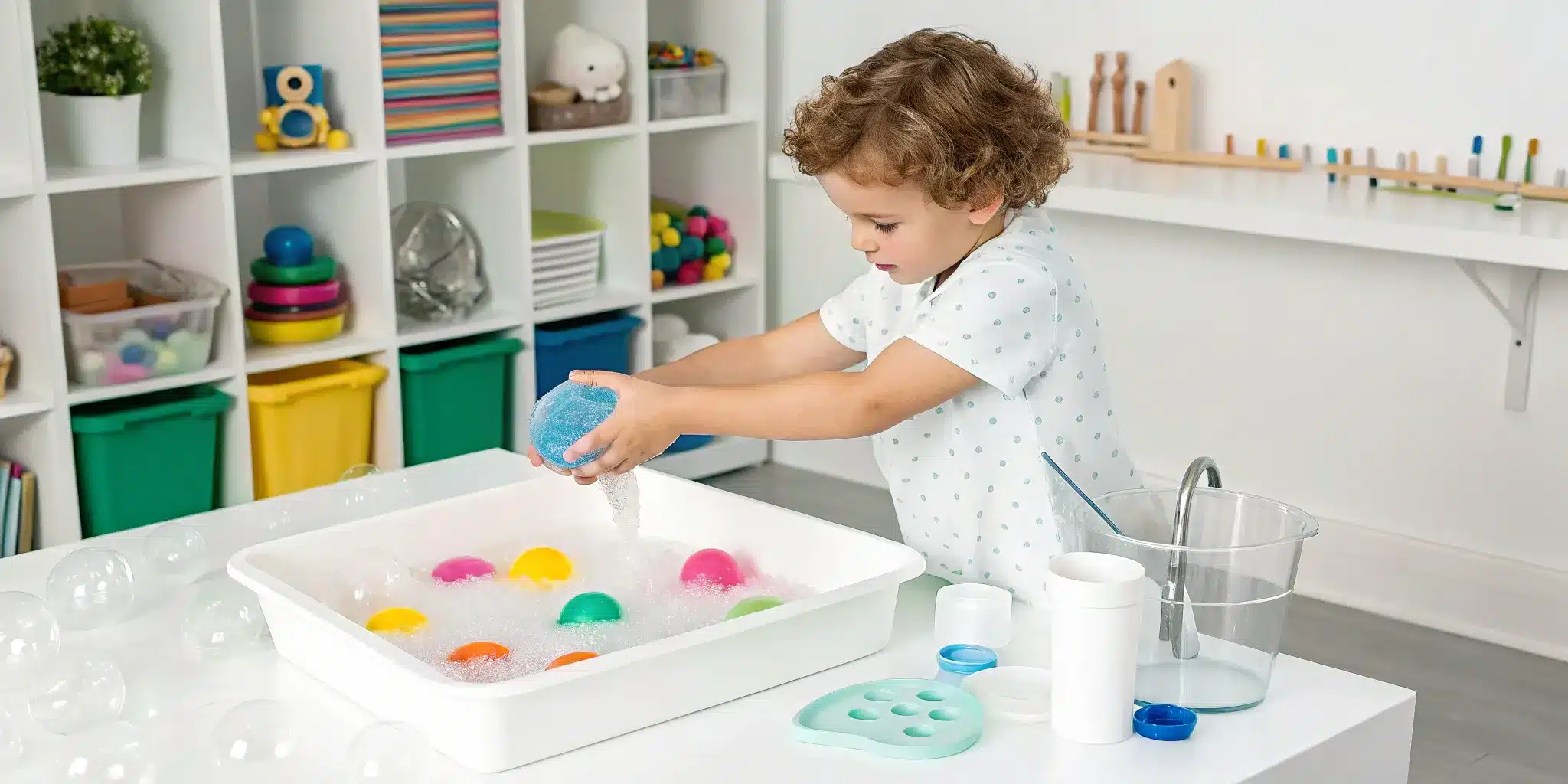
Fill two bowls with water and provide large kitchen sponges alongside empty cups. Children soak a sponge, squeeze the water into the cup, and repeat to measure volume changes. This simple task builds fine motor control and introduces basic physics concepts regarding absorption and capacity without requiring any specialized tools or complex setup. -
Tin can telephone sound experiment
Punch a small hole in the bottom of two empty tin cans and thread a long piece of string through each, securing it with a knot inside. When one child speaks into their can while another listens at the other end, the taut string transmits vibrations. This hands-on demo makes invisible sound waves tangible and audible for curious minds. -

Lemon battery LED light circuit
Insert a copper coin and a galvanized nail into a lemon, then connect them to a small LED using alligator clip wires. The acidic juice acts as an electrolyte, facilitating a chemical reaction that generates enough voltage to light the diode. This edible science project vividly demonstrates how biological materials can power simple electrical circuits. -
Baking soda volcano eruption reaction
Construct a small mound of playdough around an empty plastic cup, then add baking soda and food coloring inside. Pour vinegar into the mixture to trigger an immediate fizzing reaction that mimics a volcanic eruption. This classic chemistry experiment safely illustrates acid-base reactions and gas production through dramatic, visual output that captivates young learners. -
Rice bin shape sorting scoops
Fill a large bin with dry rice and provide scoops of varying sizes alongside geometric objects. Children must match the scoop opening to the object’s dimensions to successfully lift items from the grain. This tactile sensory activity refines hand-eye coordination and spatial reasoning while keeping little hands engaged in messy, exploratory play. -
Balloon rocket car propulsion
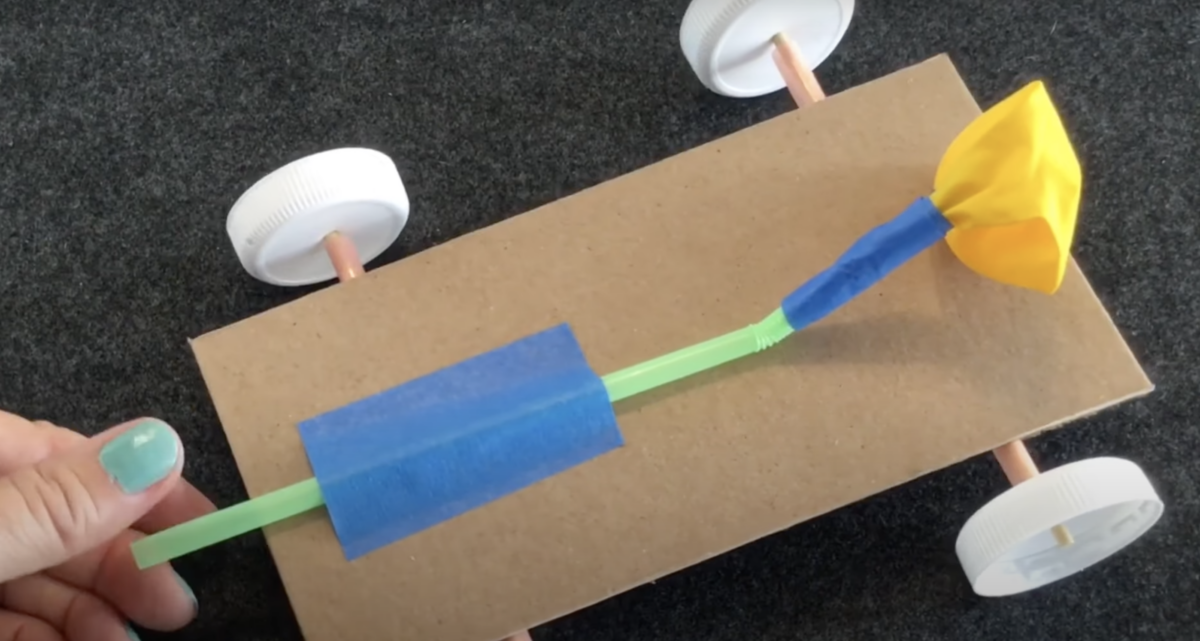
Attach a straw to a straw-mounted car or lightweight box, then blow up a balloon and tape it to the straw. Release the air to propel the car forward. This activity demonstrates Newton’s Third Law of Motion (action and reaction) in a tangible, fast-paced way that encourages iterative design improvements. -
Ice cube tray color mixing station
Fill an ice cube tray with primary colored water (red, blue, yellow). Ask children to mix two primary colors in a single cube to create secondary colors. This visual experiment teaches color theory and cause-and-effect relationships through immediate, observable chemical changes in liquid. -
Cardboard tube marble run track
Tape cardboard tubes to a wall or floor to create a path for marbles or small balls. Children adjust the angles and connections to keep the marble moving. This engineering challenge introduces concepts of gravity, momentum, and structural stability as they troubleshoot where the marble gets stuck. -
Magnet fishing with paperclips
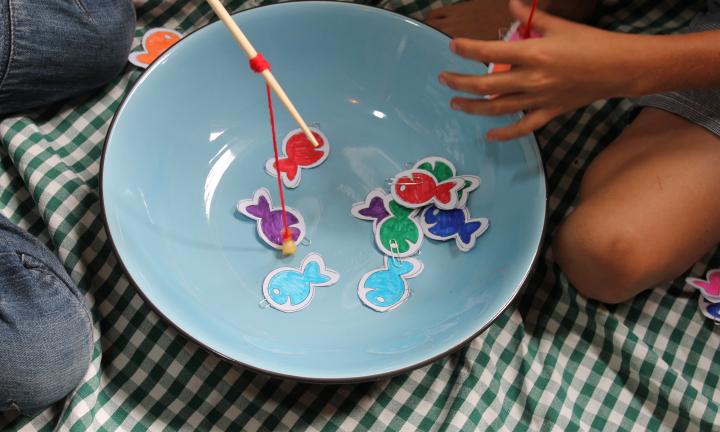
Attach a magnet to a string to create a fishing rod, then scatter paperclips, buttons, and other small objects in a bowl of water. Children “fish” for magnetic items, learning to distinguish between magnetic and non-magnetic materials through trial and error. -
Pasta necklace fine motor counting
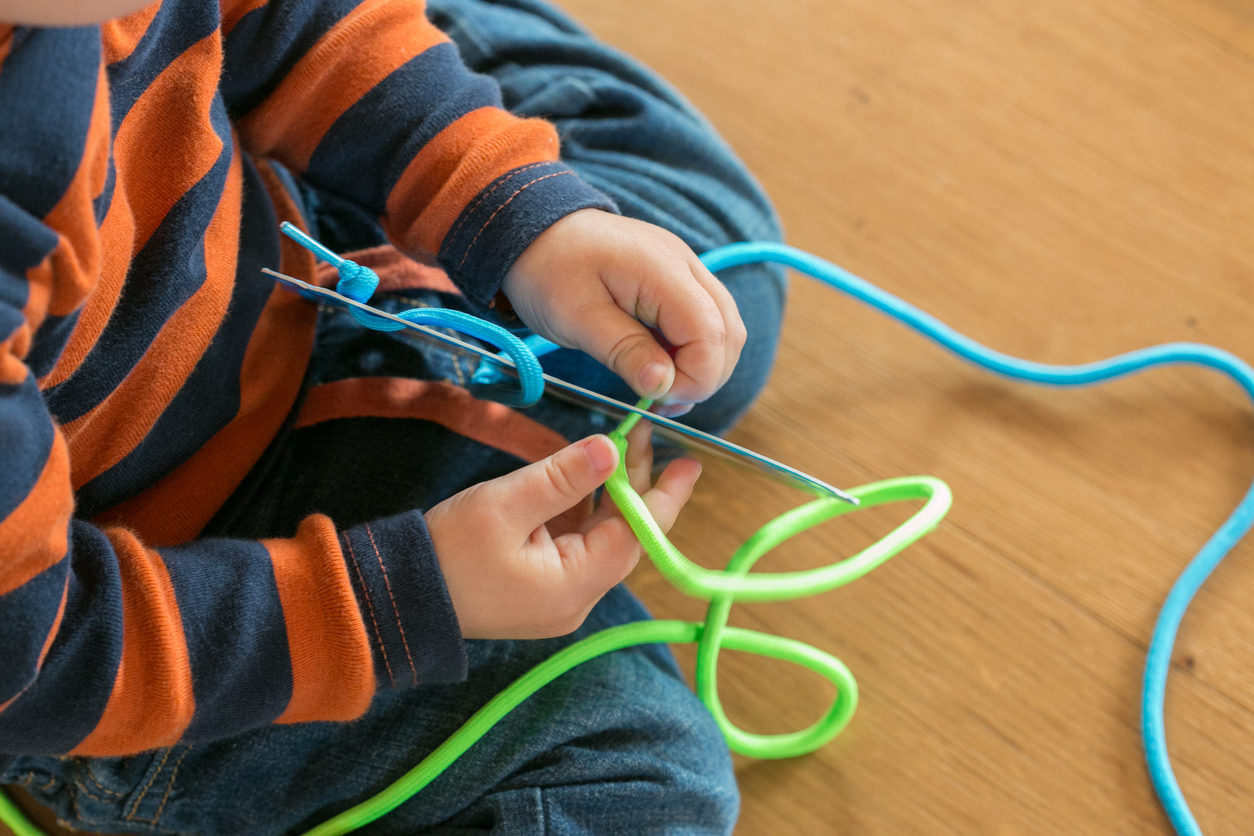
Provide large dry pasta shapes and string. Children thread the pasta while counting each piece aloud. This activity combines fine motor skill development with early numeracy, requiring focus and hand-eye coordination to manipulate small objects onto a string.
Pick the right fit
Use this section to make the Trending decision easier to compare in real life, not just on paper. Start with the reader\u2019s actual constraint, then separate must-have requirements from details that are merely nice to have. A practical choice should survive normal use, maintenance, timing, and budget. If a recommendation only works in an ideal situation, call that out plainly and give the reader a fallback path.
-
Verify the basicsConfirm the core specs, condition, and fit before comparing extras.
-
Price the downsideLook for the repair, maintenance, or replacement cost that would change the decision.
-
Compare alternativesCheck at least two comparable options before treating one listing as the benchmark.
FAQ: Interactive STEM Preschool Activities Using Everyday Household Items
What are the best household items for STEM play? Kitchen staples like vinegar, baking soda, and food coloring create instant chemistry lessons, while cardboard boxes and tape build structural engineering skills. Ice cube trays, spoons, and cups serve as precise measuring tools for early math concepts. These everyday objects are safe, inexpensive, and readily available, turning routine chores into hands-on learning opportunities without needing specialized kits.
How do I keep STEM activities safe for preschoolers? Always supervise activities involving small parts, liquids, or heat to prevent choking or spills. Use non-toxic materials like water-based paints and natural food coloring. Avoid sharp objects or fragile items unless directly handled by an adult. Keep a damp cloth nearby for quick cleanup, and ensure all materials are age-appropriate to avoid frustration or injury during exploration.
Can I use these activities for homeschooling? Yes. Programs like The Preschool Playbook and Playing Preschool structure these household activities into organized, play-based curricula. They provide templates for tracking progress and integrating STEM concepts into daily routines. This approach helps parents maintain educational consistency while using familiar home environments to reinforce learning goals.
How long should a STEM activity last for a 4-year-old? Preschoolers typically focus for 10 to 15 minutes per activity. Keep sessions short and engaging to maintain interest. If a child loses focus, transition to a different task or simplify the current one. The goal is exploration and fun, not rigid instruction. Let the child lead the pace to foster natural curiosity and sustained engagement.
Helpful gear
Use these product recommendations as a starting point, then choose the size, material, and price point that fit how you actually use the gear.

As an Amazon Associate, we may earn from qualifying purchases.
No comments yet. Be the first to share your thoughts!