

AI in the preschool classroom
AI in preschool often triggers a knee-jerk worry that robots are coming for the classroom. Parents are right to be skeptical of more screen time. However, these tools are mostly software designed to help teachers manage different learning speeds in one room, rather than replacing the person leading circle time.
Looking ahead to 2026, we won't see robots teaching circle time. Instead, expect to see more sophisticated software and apps designed to personalize learning and support teachers in their work. Think of AI as a helping hand, capable of adapting to individual needs and freeing up teachers to focus on what they do best: building relationships and fostering creativity. It's about leveraging technology to amplify their impact.
The key is developmentally appropriate use. Preschoolers learn best through play, exploration, and social interaction. AI tools should complement these methods, not dominate them. We need to prioritize activities that build foundational skills – literacy, numeracy, social-emotional development – while carefully considering how technology can support those goals. It's about finding the right balance and ensuring that technology serves the child, not the other way around.
How AI fits into STEAM
AI isn't some separate entity that needs to be awkwardly shoehorned into the preschool curriculum. It actually aligns beautifully with the STEAM approach – Science, Technology, Engineering, Art, and Math. Headstart.gov emphasizes the importance of integrating technology as a component of STEAM, and AI offers exciting new possibilities for doing just that.
For example, AI-powered storytellers can create personalized narratives, adapting to a child’s interests and vocabulary to foster literacy. Coding apps, often utilizing visual block-based programming, introduce computational thinking in an accessible way. There are even tools that allow children to experiment with AI-assisted art creation, though teacher guidance is essential to ensure it remains a creative exploration, not just a button-pushing exercise.
AI-driven simulations can bring simple science experiments to life, allowing children to explore concepts like cause and effect in a safe and engaging environment. The goal isn't to teach preschoolers to code complex algorithms, but to introduce them to the building blocks of technology and inspire curiosity. The tech should always support the learning, not be the learning itself.
- Storytelling apps that adjust vocabulary based on a child's progress.
- Visual block-based coding apps
- AI-assisted art creation (with teacher supervision)
- AI-driven simulations for science exploration
AI Tools by STEAM Area
- Science - Khan Academy Kids offers adaptive learning paths in early science concepts, adjusting difficulty based on a child’s responses. It provides personalized learning experiences without requiring teacher coding.
- Science - Mystery Science utilizes AI to recommend relevant mini-lessons and activities based on observed student engagement and previously explored topics. It focuses on open-ended exploration.
- Technology - Osmo Coding Starter Kit (with the Osmo base) uses physical blocks that children arrange to create commands, and the Osmo app provides AI-powered feedback and progression. It teaches computational thinking skills.
- Technology - Kodable introduces pre-coding concepts through engaging characters and levels. The platform adapts to a child's pace, providing support when needed.
- Engineering - LEGO Education BricQ Motion Prime, combined with the LEGO Education app, allows for AI-assisted lesson planning and activity suggestions based on engineering concepts. It facilitates hands-on problem-solving.
- Engineering - Tinkercad (though typically for older ages) has simplified features suitable for introducing basic 3D modeling concepts with guided tutorials. AI can assist in generating simple designs based on prompts.
- Art - QuillBot (used with teacher supervision) can rephrase simple sentences generated by children, helping them explore different ways to express their ideas and improve vocabulary. It’s an AI-powered paraphrasing tool.
- Math - Prodigy Math Game offers a game-based learning environment with adaptive assessments. The AI tailors math problems to each child’s skill level, ensuring appropriate challenge.
Managing digital risks
Let’s be honest: the conversation about AI in preschool isn’t just about exciting possibilities; it’s also about legitimate concerns. Screen time, data privacy, and age-appropriateness are all valid points of worry for parents and educators. It’s crucial to approach this with a healthy dose of caution and a commitment to protecting children’s well-being.
Parental controls are your first line of defense. Utilize the features offered by devices and apps to limit screen time and restrict access to inappropriate content. Understanding the Children's Online Privacy Protection Act (COPPA) is also vital. COPPA places restrictions on how companies collect and use data from children under 13, so choose platforms that are COPPA compliant and have strong privacy policies.
Teachers need specific training to spot when an app's algorithm goes off-track. SMSU guidance from 2023 suggests that passive supervision isn't enough; teachers have to be active participants in the digital activity to ensure it meets a specific lesson goal. No platform is perfectly safe, so we have to stay involved.
We must also acknowledge that even with the best precautions, risks remain. Open communication with parents and a willingness to adapt your approach are key. A thoughtful, cautious approach is paramount when introducing AI tools to young children.
- Utilize parental controls to limit screen time.
- Choose COPPA-compliant platforms with strong privacy policies.
- Provide teachers with comprehensive training on safe tech use.
- Maintain open communication with parents.
Current tools for early learners
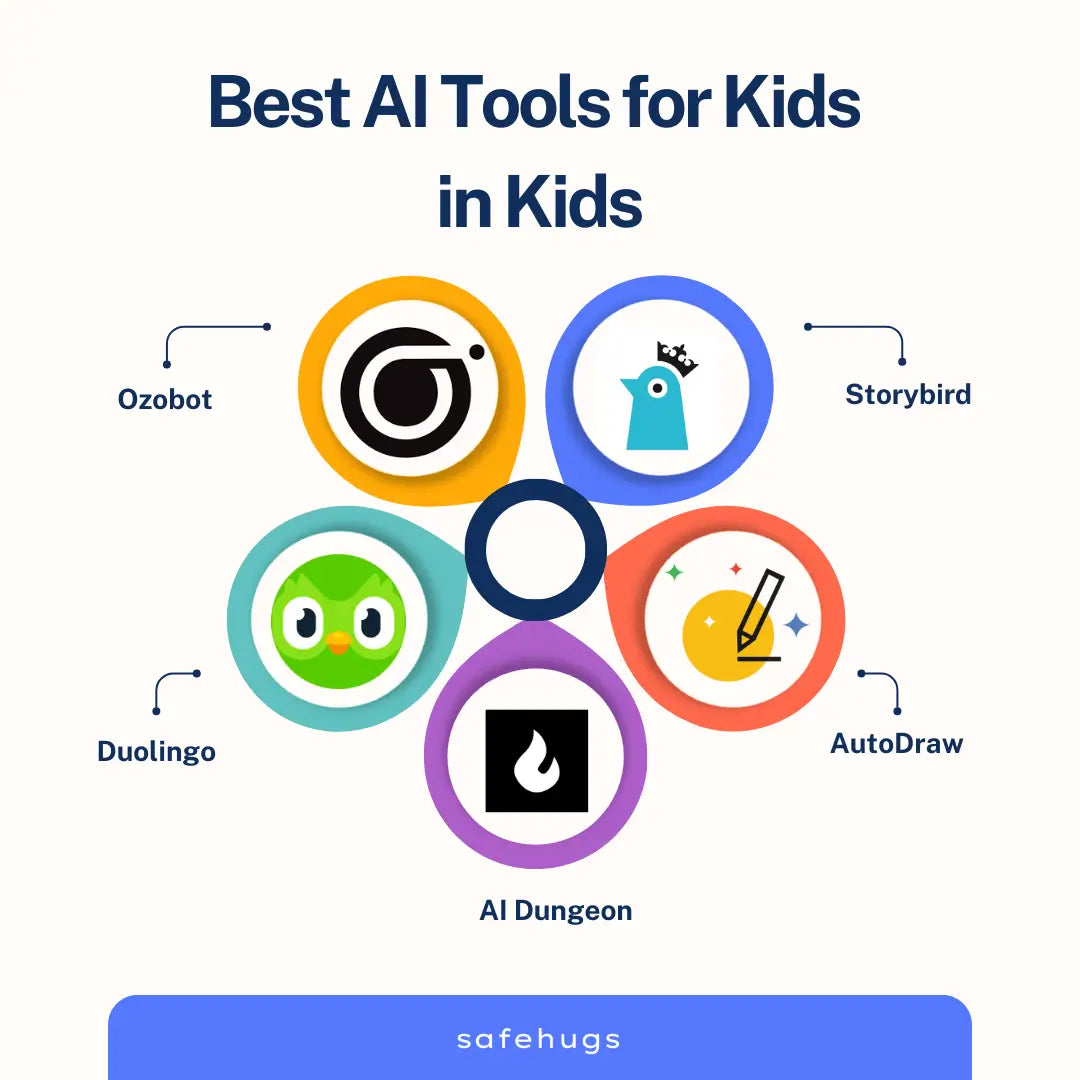
Several AI-powered tools are emerging that show promise for preschool education, though it’s important to approach these with a critical eye. These are not endorsements, simply observations of what’s currently available and under development. One example is Khan Academy Kids, which uses adaptive learning technology to personalize the learning experience for each child, focusing on foundational skills in math and literacy. It adjusts the difficulty level based on the child’s performance, providing targeted support where needed.
Duolingo ABC is a free option for early literacy. It uses speech recognition to give kids feedback on their pronunciation in real-time. It works well as a 15-minute supplement to phonics lessons, though it lacks the nuance of a teacher listening to a child read aloud.
Finally, there’s a growing number of AI-powered tools designed to create personalized learning materials. These tools can generate worksheets, quizzes, and other activities tailored to a child’s specific needs and interests. However, the quality of these materials can vary significantly, so careful evaluation is crucial. Consider platforms like Curious World, which offers a curated library of educational games and videos, with some AI-driven personalization features.
It is vital to emphasize that research on the long-term effectiveness of these tools is still ongoing. We need more data to determine which tools are truly beneficial and how best to integrate them into the preschool curriculum. A healthy skepticism and a commitment to evidence-based practice are essential.
AI-Enhanced Learning Tools for Preschoolers: A Comparative Overview (2026)
| Tool Name | Focus Area | Key Features | Adult Involvement | Potential Benefits | Potential Drawbacks |
|---|---|---|---|---|---|
| WonderBloom | Literacy & Creativity | Personalized story generation based on child input, voice recognition for interactive storytelling, adaptive difficulty. | High - Requires adult guidance for initial setup and discussion of stories. | Fosters imagination, encourages language development, supports early reading skills. | Potential for screen time overuse, reliance on generated content may limit original thought. |
| Numi | Early Math Concepts | Game-based learning focusing on number recognition, counting, and basic shapes, utilizes visual and auditory cues. | Moderate - Adults can track progress and select appropriate game levels. | Reinforces foundational math skills, provides engaging practice, adapts to individual learning pace. | May not address all aspects of mathematical thinking, limited scope beyond core concepts. |
| Artful AI | Art & Creative Expression | AI-assisted drawing and coloring activities, generates creative prompts, offers feedback on artistic exploration. | Moderate - Adults can provide encouragement and facilitate discussion about artwork. | Encourages artistic exploration, develops fine motor skills, promotes self-expression. | Potential for over-reliance on AI assistance, may not fully capture the process of artistic development. |
| LinguaLeap | Language Development (Multiple Languages) | Interactive language learning games, speech recognition for pronunciation practice, culturally relevant content. | High - Adults are needed to select the target language and support vocabulary building. | Introduces children to different languages, enhances phonological awareness, promotes cultural understanding. | Accuracy of speech recognition may vary, requires consistent adult support for optimal learning. |
| PlayPrompt | STEAM Exploration | Generates open-ended STEAM challenges and prompts, encourages problem-solving and critical thinking, adaptable to various materials. | Very High - Requires significant adult facilitation to guide exploration and provide resources. | Stimulates curiosity, develops problem-solving skills, integrates multiple learning areas. | Effectiveness heavily dependent on adult implementation, may require significant preparation time. |
Qualitative comparison based on the article research brief. Confirm current product details in the official docs before making implementation choices.
Support for teachers
The conversation about AI in preschool often centers on tablets and apps, but the potential extends far beyond those devices. AI can also be a powerful tool for supporting teachers in their work, freeing them up to focus on what matters most: building relationships with children and fostering their development.
For example, AI-powered tools can assist with lesson planning, suggesting activities and resources aligned with specific learning objectives. They can also help with assessment, providing insights into student progress and identifying areas where children may be struggling. This doesn’t replace a teacher’s professional judgment, but it can provide valuable data to inform their instruction.
AI can also be used to create accessible learning materials for children with diverse needs. Tools can automatically generate captions for videos, translate text into different languages, or create audio descriptions of images. This ensures that all children have equal access to learning opportunities. Ultimately, AI should empower teachers, not replace them, by automating administrative tasks and providing personalized insights.
The necessity of physical play
It’s easy to get caught up in the excitement of new technologies, but we must never lose sight of the fundamental importance of play-based learning and human interaction in early childhood development. Preschoolers learn best through hands-on experiences, social collaboration, and imaginative play. These are things that AI simply cannot replicate.
AI tools should supplement, not supplant, traditional learning methods. A balance must be struck between screen time and opportunities for free play, exploration, and social interaction. Teachers play a crucial role in fostering social-emotional development, helping children learn to regulate their emotions, build relationships, and navigate the world around them.
We need to be mindful of the potential for AI to inadvertently reduce opportunities for social interaction. For example, if children are spending too much time engaged with individual apps, they may have less time to interact with their peers. It’s important to design learning experiences that encourage collaboration and communication. The human connection is irreplaceable.
No comments yet. Be the first to share your thoughts!