

10 Safe Tech Tools and Educational Materials for 2026
Selecting the right technology for preschoolers requires balancing engagement with developmental safety. These ten tools and materials prioritize screen-time limits, data privacy, and hands-on learning to support early childhood milestones without replacing human interaction.
1. adaptive storytelling apps that adjust to reading level
These applications use natural language processing to modify narrative complexity in real time, ensuring the text remains challenging but not frustrating for preschoolers. When a child struggles with a specific word or concept, the AI subtly simplifies sentence structures or provides visual context clues without breaking the immersion of the story.
This dynamic adjustment helps maintain engagement while building foundational literacy skills. Parents can monitor progress through detailed dashboards that track vocabulary acquisition and reading fluency, allowing for targeted support at home rather than relying on generic age-based book recommendations.

2. conversational agents for speech therapy support
Specialized chatbots designed for early childhood development offer a judgment-free zone for children practicing pronunciation and sentence formation. These tools respond to spoken input with immediate, gentle feedback, encouraging repeated attempts without the social anxiety often associated with correcting young learners in group settings.
The technology focuses on phonemic awareness and expressive language, providing consistent practice opportunities that complement traditional speech therapy sessions. By logging interaction patterns, these agents help therapists identify specific speech impediments or developmental delays earlier than standard observation methods might allow.

3. augmented reality math manipulatives
AR-enabled apps project three-dimensional geometric shapes and counting objects onto physical tables, allowing children to interact with abstract mathematical concepts through tangible movement. Instead of looking at flat numbers on a screen, students can pick up virtual blocks, stack them, and see immediate visual feedback regarding addition and subtraction.
This kinesthetic approach bridges the gap between concrete and abstract thinking, a critical developmental milestone in early education. The technology encourages collaborative play, as multiple children can manipulate the same virtual objects simultaneously, fostering both mathematical understanding and social negotiation skills.

4. emotion recognition journals for social-emotional learning
These digital journals use facial expression analysis to help children identify and label their own emotions throughout the day. By capturing brief daily reflections, the AI provides personalized prompts and coping strategies based on detected mood patterns, helping young learners develop emotional vocabulary and self-regulation techniques.
The system ensures privacy by processing images locally on the device and never storing raw facial data, addressing key parental concerns about biometric surveillance. Educators receive aggregated, anonymized insights into class-wide emotional trends, enabling proactive interventions during periods of high stress or conflict.
5. personalized curriculum generators for teachers
AI-driven platforms analyze classroom performance data to suggest tailored activity plans and resource allocations for individual students. Teachers can input specific learning objectives or observed gaps, and the system generates a week-long schedule of targeted exercises that align with state preschool standards and developmental benchmarks.
This tool reduces administrative burden by automating lesson planning logistics, allowing educators to spend more time on direct instruction and student interaction. The generated materials are designed to be easily adaptable, ensuring that technology serves as a scaffold for human teaching rather than a replacement for teacher expertise.

6. AI for developmental screening
Artificial intelligence can assist educators in identifying early signs of developmental delays by analyzing patterns in children’s play and interaction. These tools process observational data to flag potential concerns, allowing teachers to intervene earlier than traditional methods might permit. This proactive approach shifts the focus from reactive diagnosis to supportive, timely guidance.
Safety FirstPrivacy remains paramount when using these systems. Data must be anonymized and stored securely, ensuring that sensitive developmental metrics are never exposed. Schools should vet vendors for compliance with COPPA and FERPA, treating child data with the same rigor as medical records to maintain trust and legal standing.
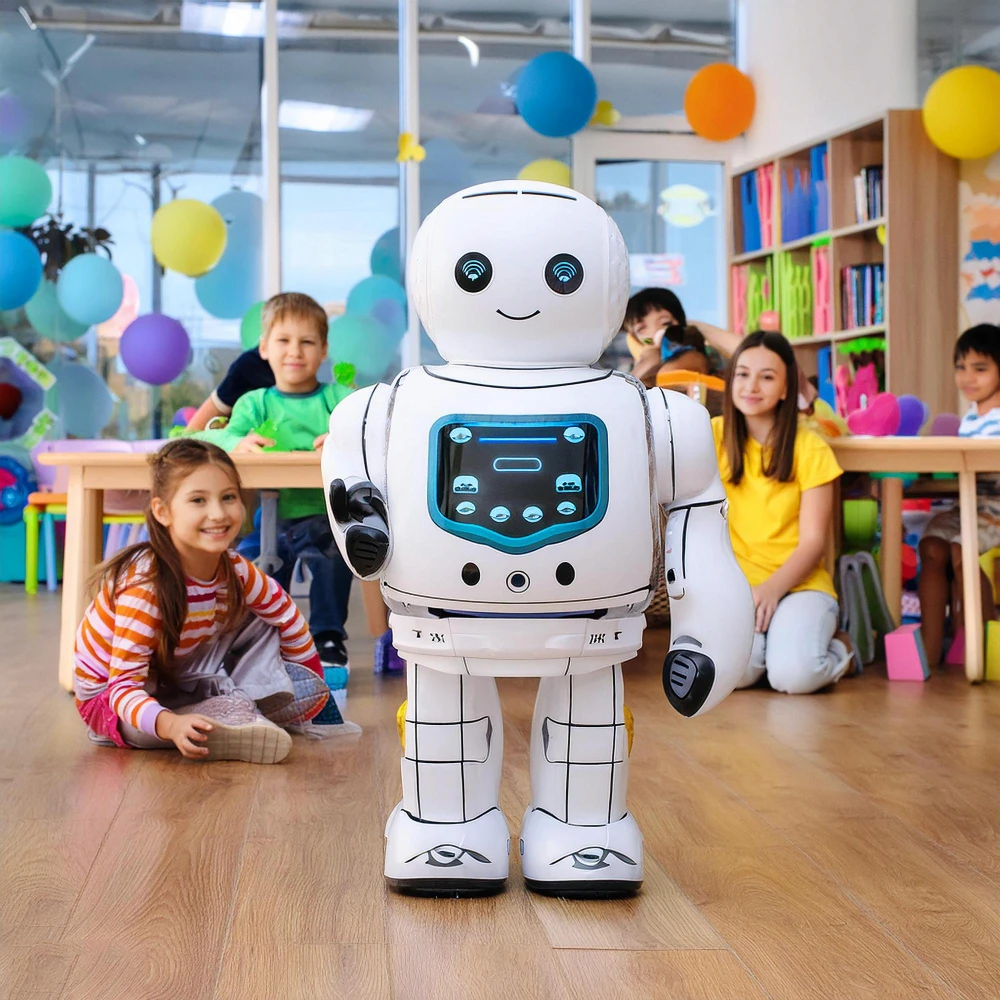
7. Social robots for language engagement
Social robots designed for preschool settings offer interactive language practice through responsive dialogue and storytelling. These devices adapt their speech complexity based on the child’s responses, creating a low-pressure environment for practicing new vocabulary. The physical presence of the robot often encourages shy children to speak more freely than they might with a screen alone.
Human OversightRobots should never replace human interaction but rather supplement it. Teachers must remain present to contextualize the robot’s lessons and ensure social cues are correctly interpreted. Regular audits of the robot’s interaction logs help educators understand which phrases resonate with students and which may need adjustment.
8. Human-centered AI guidelines
Implementing AI in early childhood education requires strict adherence to human-centered guidelines that prioritize educator agency. These frameworks ensure that technology supports rather than dictates pedagogical choices, keeping the teacher as the primary decision-maker. Clear protocols define when AI suggestions are optional versus mandatory, preventing algorithmic drift in curriculum delivery.
Policy CheckSchools must establish a review board including teachers, parents, and child development experts to evaluate AI tools before adoption. This committee assesses not just technical functionality but also ethical implications and developmental appropriateness. Regular updates to these guidelines ensure they evolve alongside technological advancements and emerging research.
9. Critiquing AI-generated lesson plans
AI-generated lesson plans offer a starting point but require rigorous human review to ensure developmental appropriateness. Algorithms may produce activities that are technically sound but lack the nuance needed for diverse learning styles or cultural contexts. Educators must critically evaluate each plan, adjusting for classroom dynamics and individual student needs before implementation.
Quality ControlA checklist for reviewing AI content should include checks for bias, age-appropriateness, and alignment with learning standards. Teachers should document any significant modifications made to AI suggestions, creating a feedback loop that improves future outputs. This critical engagement ensures that technology enhances rather than undermines educational quality.
10. Curated AI learning apps
Selecting AI learning apps requires a focus on evidence-based design and transparent data practices. Effective apps for preschoolers use adaptive algorithms to personalize content without compromising privacy or engagement. Look for tools that offer clear progress reports for parents and educators, ensuring that screen time translates into measurable learning outcomes.
Vendor VettingBefore integrating any app, conduct a trial period with a small group of students to assess engagement and usability. Gather feedback from children, parents, and teachers to identify potential issues. Choose platforms that allow for easy opt-out and data deletion, giving families control over their child’s digital footprint and fostering a trustworthy learning environment.
How we chose these tools
We evaluated AI-enhanced preschool resources against a strict safety and pedagogical baseline. The goal was to identify tools that adapt to individual learning paces without replacing the human interaction that defines early childhood development.
Our selection process focused on three concrete criteria:
- Data privacy: We prioritized platforms with transparent data policies that minimize or eliminate the collection of biometric or behavioral data from children under six.
- Pedagogical alignment: Tools were selected only if they support established early learning frameworks, such as play-based inquiry or literacy scaffolding, rather than relying on passive screen time.
- Adaptive capability: We favored systems that adjust content difficulty in real-time based on child engagement, ensuring no student is left behind or bored.
This approach filters out flashy but superficial apps, leaving only materials that offer measurable educational value while keeping young learners safe.
How to choose the right AI tools for preschool
Selecting technology for early learners requires balancing engagement with developmental appropriateness. The goal is not to replace human interaction but to support it with tools that adapt to individual pacing. When evaluating AI-enhanced materials, focus on safety, transparency, and educational value rather than novelty.
Look for tools that comply with COPPA (Children’s Online Privacy Protection Act) and FERPA guidelines. Reputable providers should clearly state what data is collected, how it is stored, and who has access. Avoid any platform that requires personal information beyond what is necessary for basic functionality. The Institute for Child Success emphasizes that robust safeguards are non-negotiable in early childhood settings.
Effective AI tools adjust content based on how each child learns. This personalization ensures that no student is left behind or bored by material that is too simple. Look for features that offer differentiated instruction, such as varying difficulty levels or alternative explanations for concepts like counting or letter recognition.
Technology should act as a bridge, not a barrier, between teacher and student. The best AI-enhanced materials encourage discussion, problem-solving, and social engagement. Avoid tools that isolate children in silent, screen-only activities. Instead, choose platforms that prompt teachers to facilitate group activities or parent-child conversations around the digital content.
Before making a final decision, use this quick checklist to validate your choices:

As an Amazon Associate, we may earn from qualifying purchases.
Choosing wisely means prioritizing tools that respect children’s privacy while actively supporting their cognitive and social growth. By following these steps, you can integrate technology in a way that enhances, rather than disrupts, the foundational years of learning.
Common questions
Are AI tools safe for preschoolers?
Safety depends on strict data protection and human oversight. The Institute for Child Success notes that while smart toys can facilitate conversation, robust safeguards are necessary to protect young children’s privacy. Always verify that a tool complies with COPPA and does not store biometric data without explicit parental consent.
Can AI replace a preschool teacher?
No. AI enhances instruction by adjusting content based on how a child learns, but it cannot replicate the responsive, relationship-based teaching that defines early childhood education. Teachers remain essential for social-emotional guidance and interpreting nuanced behavioral cues that algorithms miss.
What skills should children learn alongside AI tools?
AI literacy is essential. Children should learn to distinguish between human-created and AI-generated content. This foundational skill helps them navigate digital spaces critically as they grow, ensuring they use technology as a tool rather than a passive consumer of automated outputs.
How do I choose the right AI educational material?
Look for tools that adapt to individual learning styles without creating isolated experiences. Prioritize platforms that offer teachers actionable insights to support responsive instruction. Avoid products that generate lesson plans without teacher review, as these often overlook the relational aspects critical to early development.
No comments yet. Be the first to share your thoughts!