

5 Spring Sensory Play Ideas for Preschoolers
Transform your living room into a vibrant spring learning hub with these five hands-on sensory activities designed specifically for preschoolers. Each idea blends educational value with pure fun, offering step-by-step visual guidance to help you create engaging, mess-friendly experiences that spark curiosity and development.
-
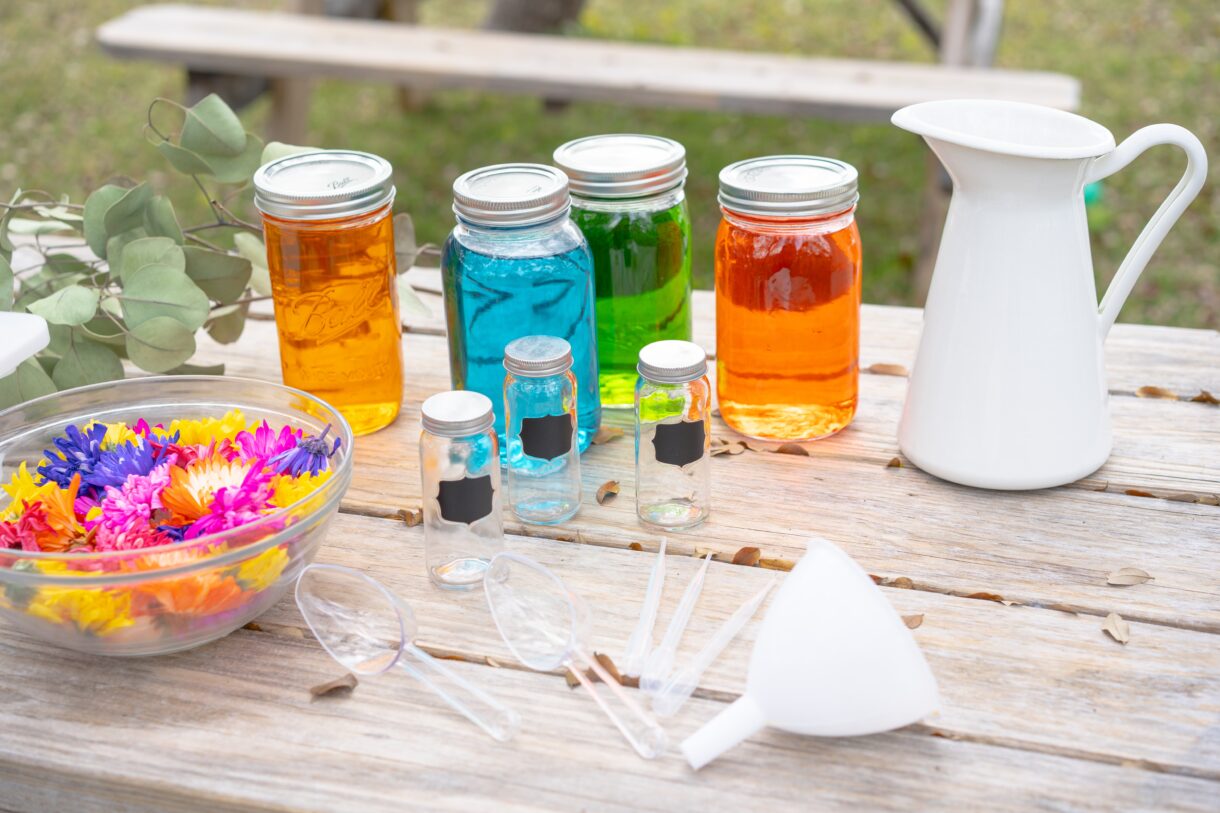
Build a flower scent jar
Fill a clear jar with fresh spring blossoms, lavender, or mint leaves. Let children gently crush petals to release fragrances, linking smell to memory. This simple activity sharpens olfactory discrimination while introducing botanical basics. The visual appeal of colorful blooms inside the glass container invites repeated exploration and calm, focused observation during quiet play moments. -
Create a rain puddle tray
Pour water into a shallow tray and add floating leaves, twigs, and small stones. Use cups and funnels to simulate rainfall and watch water levels rise. This tactile experience teaches volume, cause-and-effect, and basic hydrology concepts. Children manipulate tools to redirect flow, developing fine motor control while engaging with natural elements in a contained, mess-free environment. -
Make a butterfly texture board
Glue various materials like cotton balls, sandpaper, and foil onto cardboard cutouts of butterfly wings. Encourage children to trace patterns with their fingers, distinguishing smooth from rough surfaces. This activity enhances tactile discrimination and hand-eye coordination. As they explore different textures, they learn descriptive vocabulary while creating a visually engaging art piece that celebrates spring metamorphosis. -
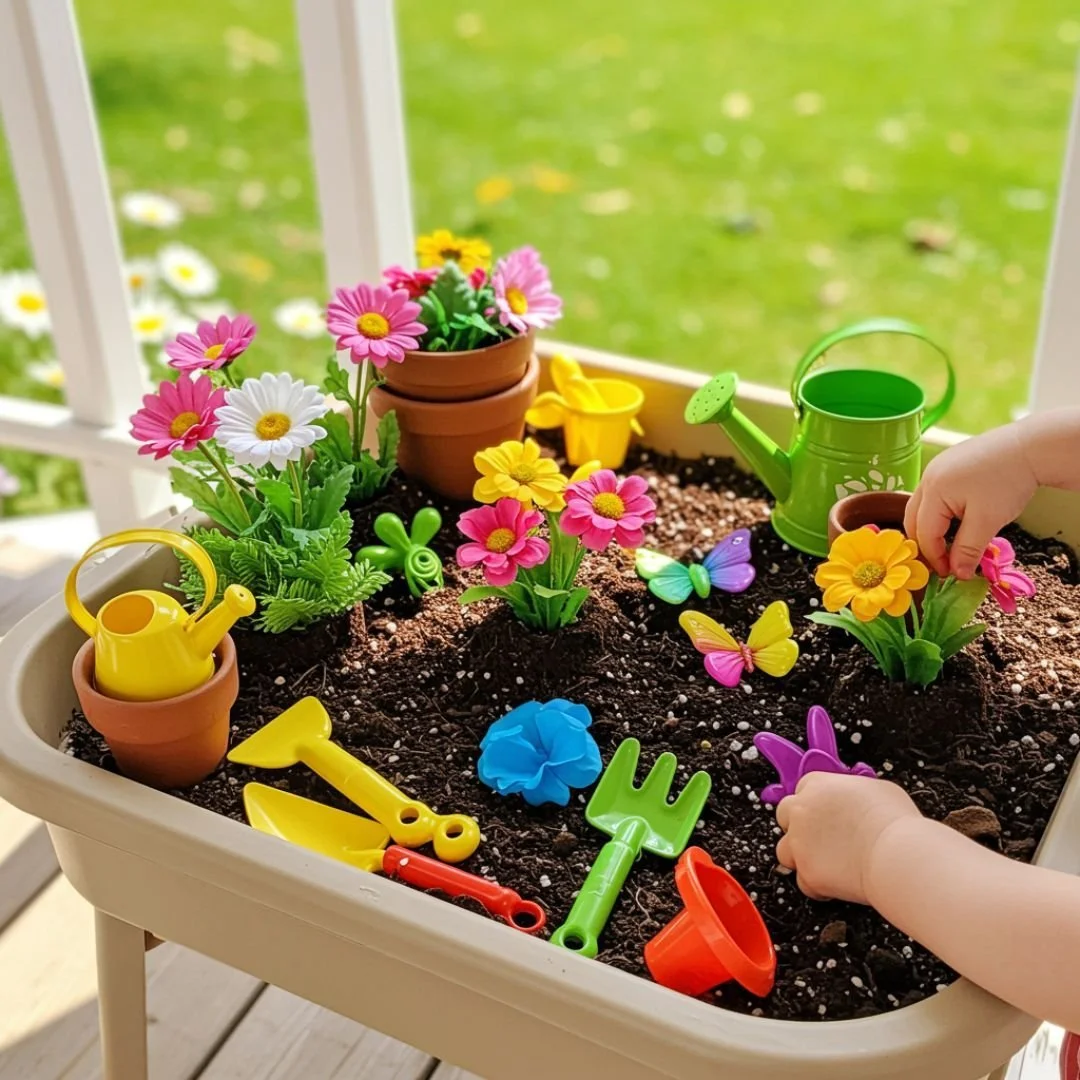
Explore a spring garden soil bin
Fill a bin with safe, sterile potting soil, mixing in hidden plastic insects, seeds, and small rocks. Provide scoops and sieves for digging and sifting. This hands-on exploration introduces earth science concepts like composition and habitat. Children develop patience and persistence as they search for treasures, strengthening pincer grasp and sensory processing through direct interaction with natural earth materials. -
Mix pastel colored water beads
Soak clear water beads in water tinted with soft pink, blue, and yellow food coloring. Let children scoop and transfer beads between containers using tongs or spoons. This activity refines fine motor skills and color recognition. The squishy texture provides soothing sensory input, while the visual contrast of pastel hues against clear beads creates a calming, aesthetically pleasing play experience.
Set up spring sensory stations
Spring sensory play stations turn simple household items into powerful learning tools for preschoolers. By setting up themed bins filled with materials like soil, water beads, or faux flowers, you create an environment that encourages tactile exploration. This type of play is not just about keeping little hands busy; it supports critical early childhood development in ways that structured lessons often cannot.
When children manipulate different textures, they build fine motor skills and hand-eye coordination. The act of scooping, pouring, and sorting strengthens the small muscles in their fingers and hands, which are essential for future writing tasks. At the same time, describing what they feel and see helps expand their vocabulary and language processing abilities.
Why sensory play matters: It boosts fine motor skills, language development, and cognitive processing through tactile exploration.
Setting up these stations is straightforward. You can use shallow plastic bins or large trays to contain the mess. Fill them with spring-themed items such as green rice, flower petals, or small plastic insects. The goal is to provide a safe, contained space where children can freely experiment with cause and effect. As they engage with these materials, they naturally practice problem-solving and focus, laying a strong foundation for later academic success.
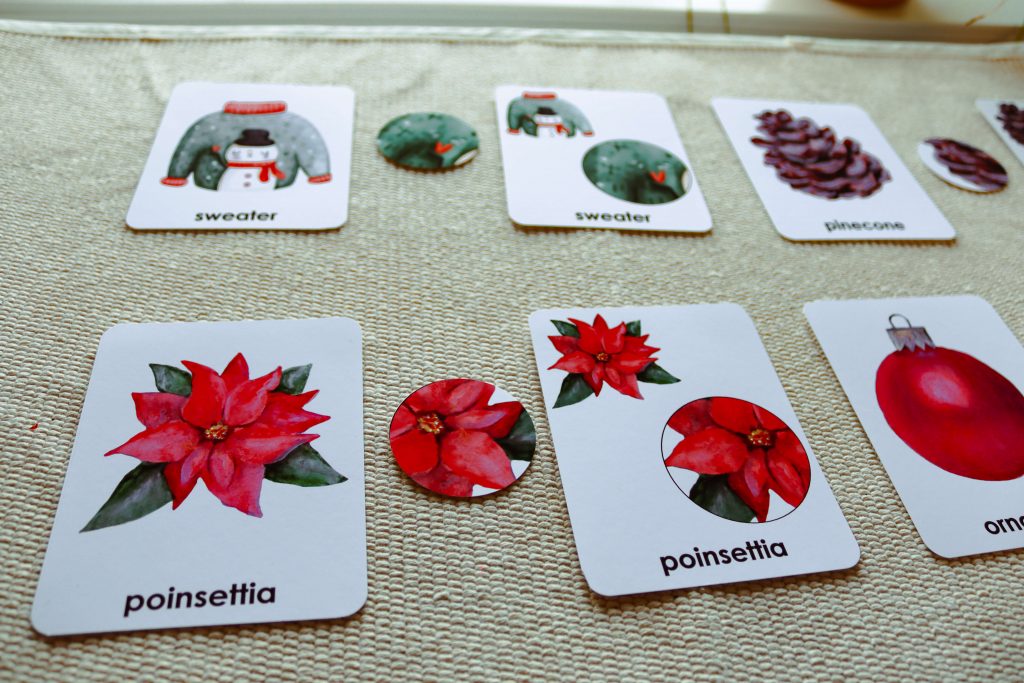
Check your spring sensory supplies
Before setting up your spring sensory play activities, gather your core materials. A well-stocked sensory bin relies on a few simple, durable items that can be reused across different themes. Having these essentials ready ensures you can pivot between activities without hunting for tools mid-play.
Use the checklist below to verify you have the necessary supplies on hand. This short list covers the basics for scooping, pouring, and exploring natural textures.
- Plastic bins or tubs: Choose shallow containers that are easy for small hands to reach into. Clear bins help children see the contents, while opaque ones add an element of surprise.
- Scoops and spoons: Provide a variety of sizes, from large ice cream scoops to small measuring spoons. These tools develop fine motor control and hand-eye coordination.
- Natural materials: Collect items like dried beans, rice, potpourri, or safe plant cuttings. These offer different textures and scents that engage the senses.
- Cleaning supplies: Keep paper towels and a damp cloth nearby for quick cleanups. Sensory play is messy, and having wipes ready makes the transition to the next activity smoother.
With these items organized, you are ready to start exploring. The tactile experience of manipulating these materials helps preschoolers build cognitive connections while having fun.
Common questions about spring sensory play
Parents and educators often have specific concerns before setting up spring-themed sensory bins or outdoor activities. Addressing safety, age appropriateness, and material choices ensures the experience is both educational and worry-free for your preschooler.
Setting up these activities doesn’t require expensive supplies. Simple household items combined with free natural finds create rich learning environments. Focus on open-ended play where children can explore textures, colors, and scents at their own pace.
Put 5 Sensory Play Ideas for Spring into practice
No comments yet. Be the first to share your thoughts!